
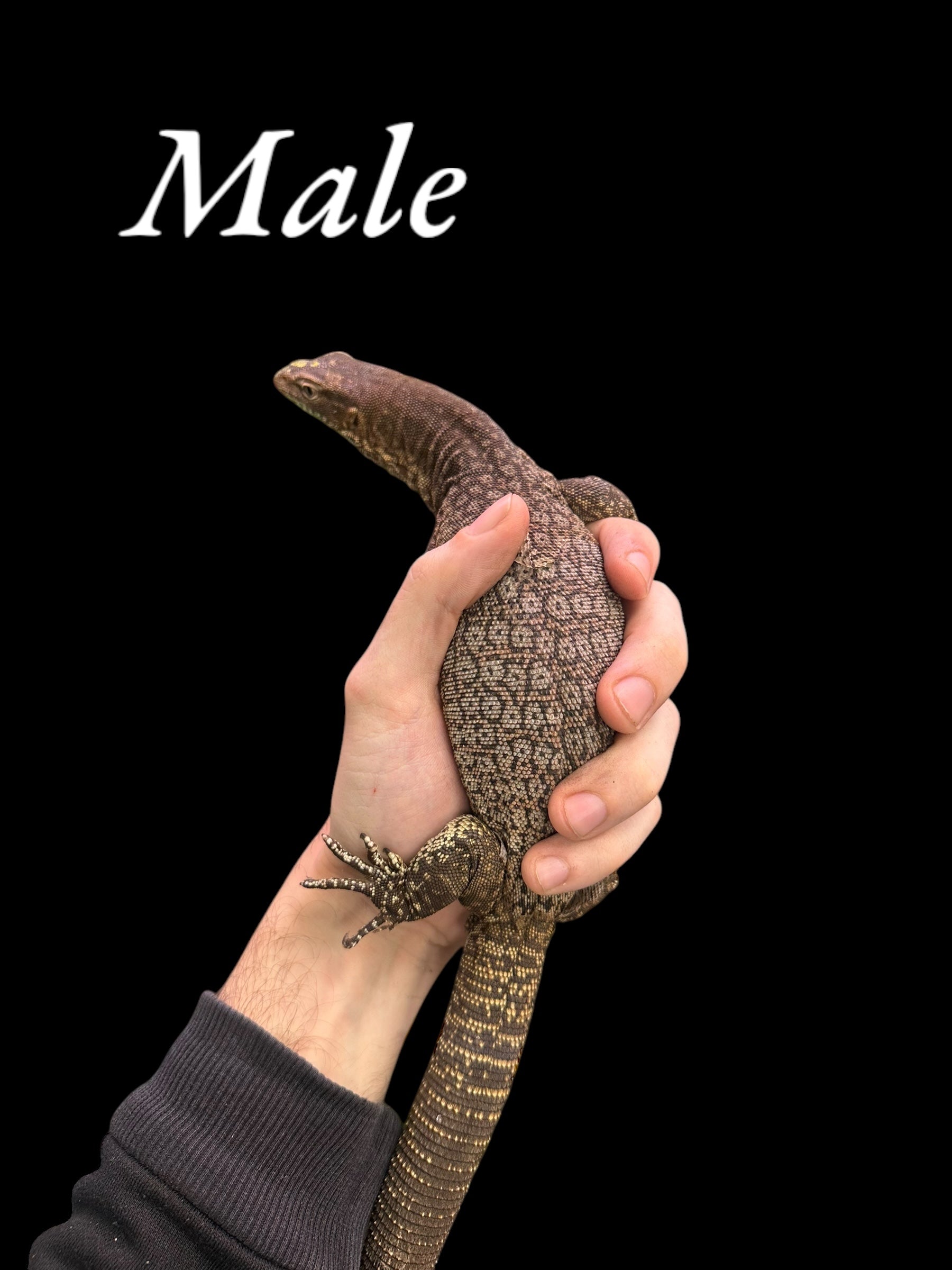
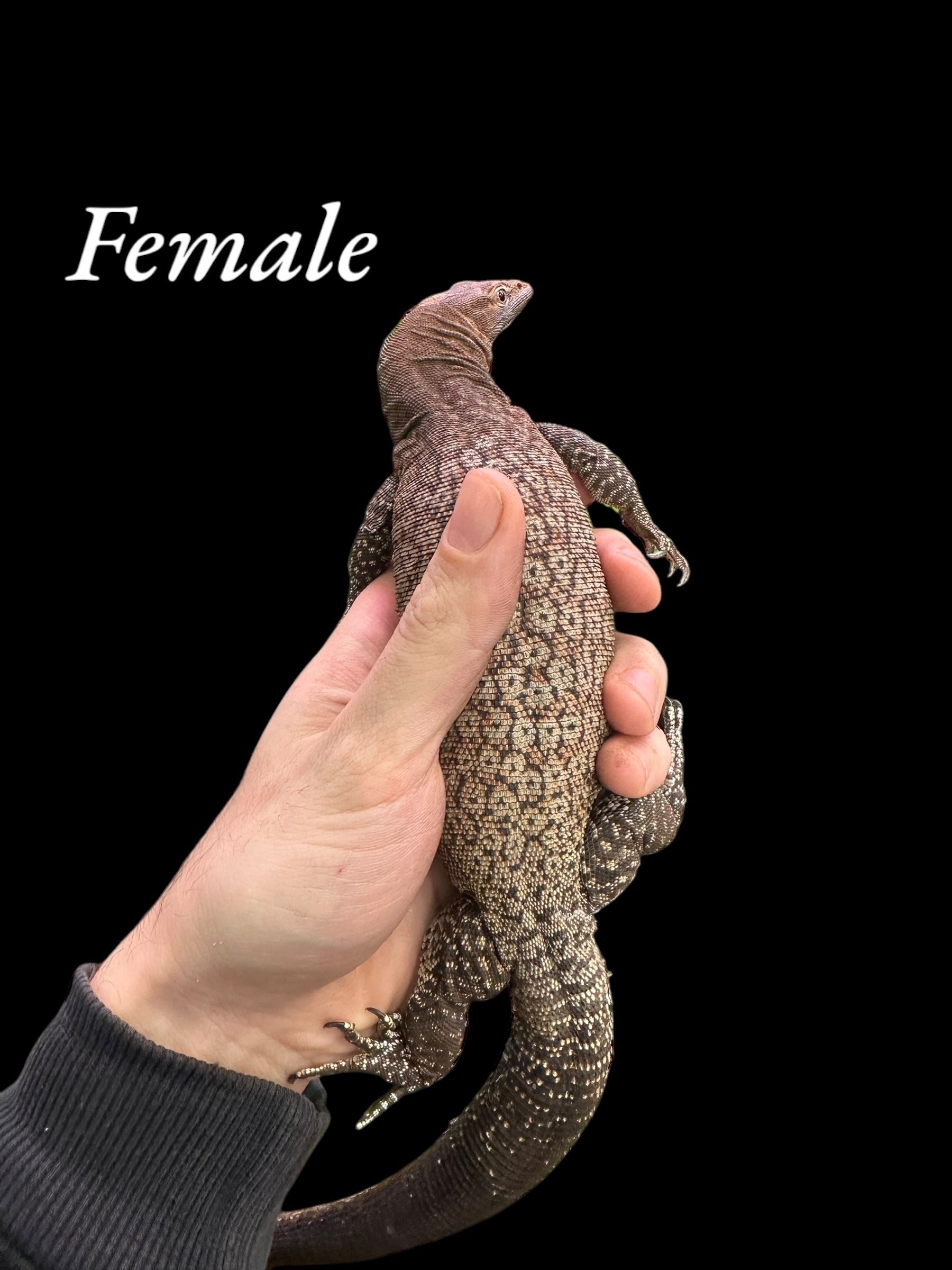
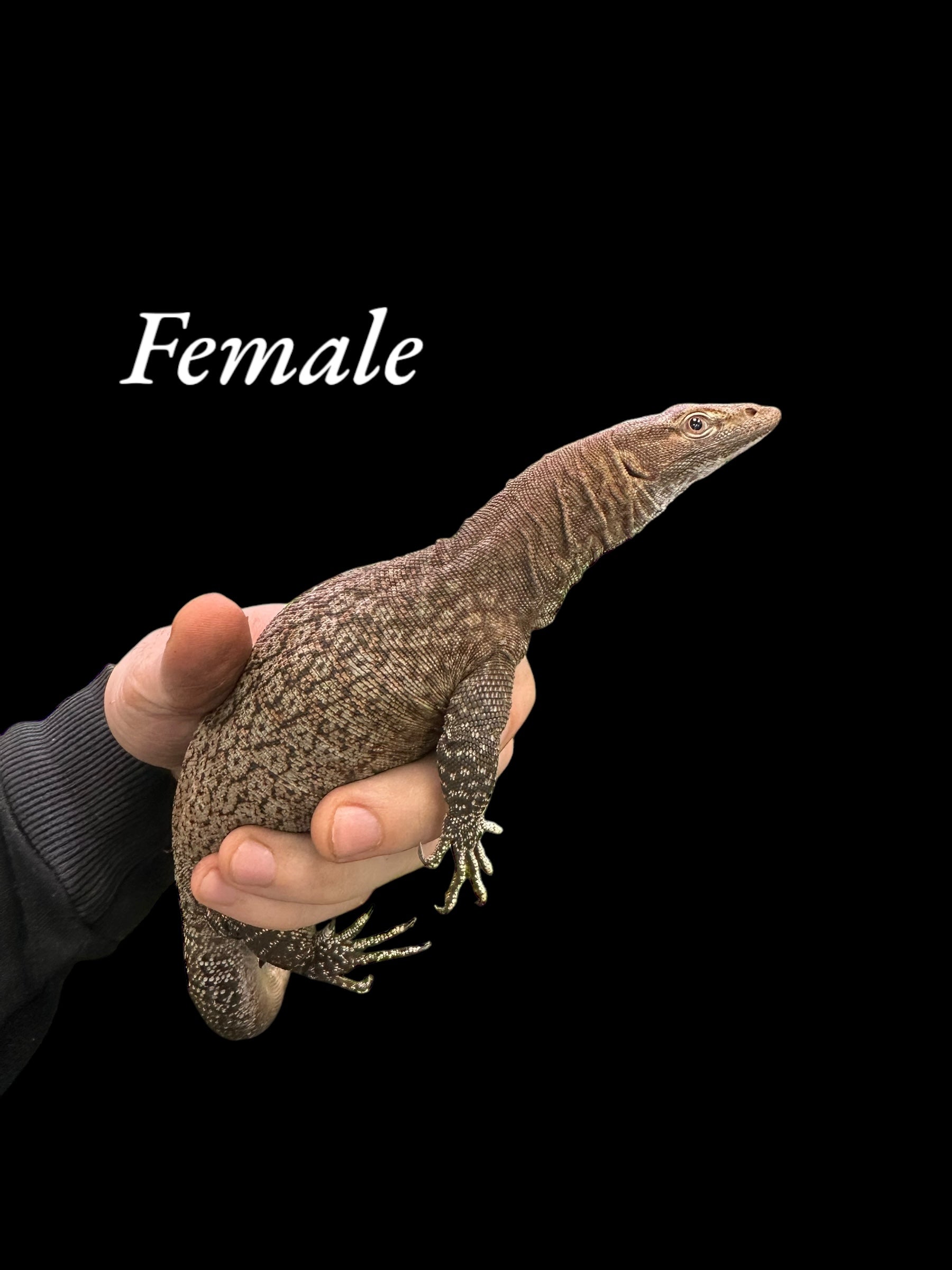
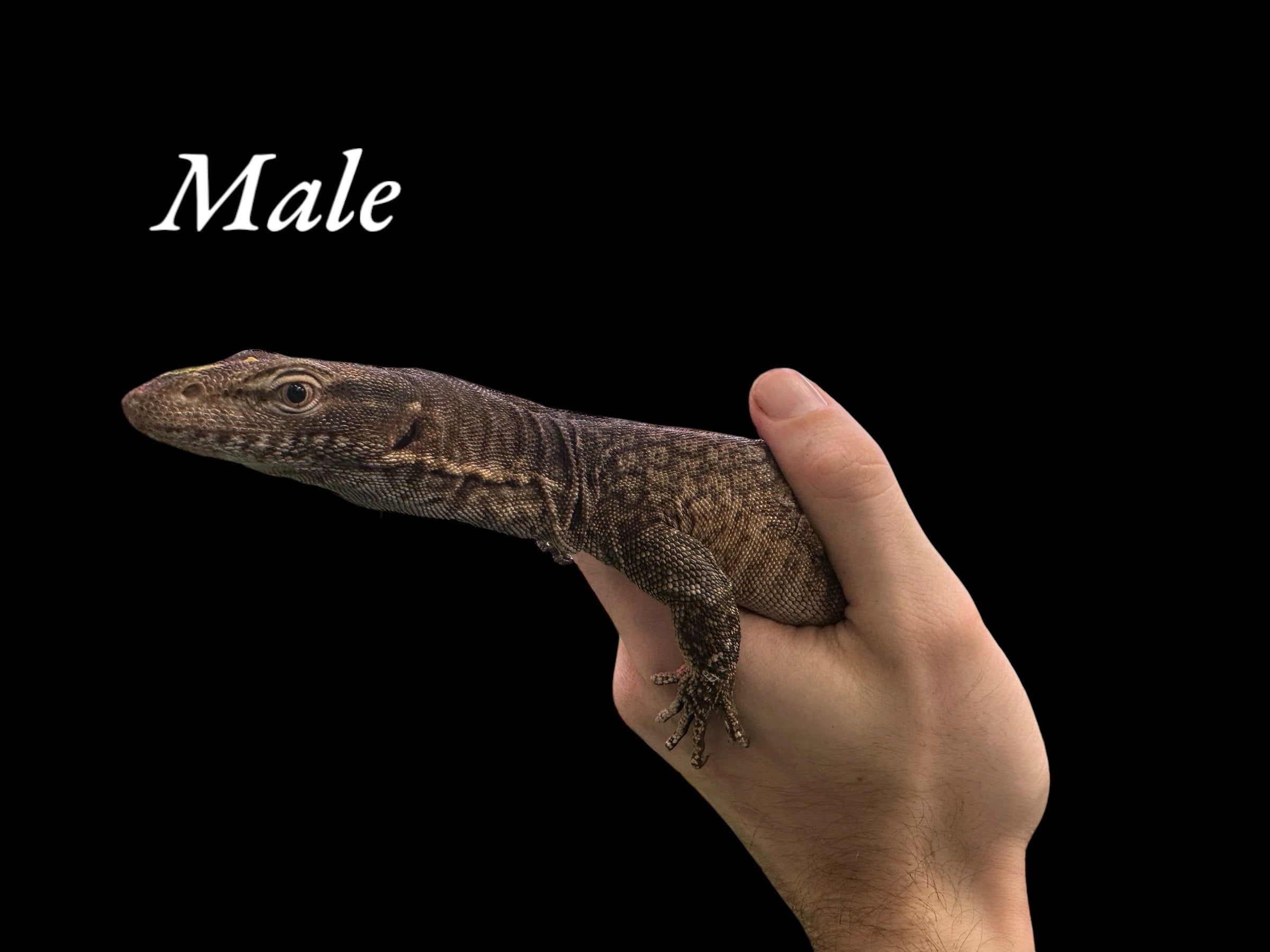


Avis de non-responsabilité concernant les photos
Description
Varan à tête noire (Varanus tristis)
Nom scientifique : Varanus tristis
Nom commun : Varan à tête noire
Aperçu de l'espèce
Taille : Les adultes atteignent généralement une longueur totale de 50 à 80 cm (1,6 à 2,6 pi), avec un corps mince et agile et une longue queue.
Apparence : Le Varan à tête noire doit son nom à sa tête distinctement sombre, contrastant avec un corps gris clair à olive. Ses écailles sont lisses, et sa queue est longue et effilée pour l'équilibre. Les juvéniles peuvent présenter des motifs plus contrastés ou des tons plus clairs qui s'assombrissent avec l'âge. Les mâles sont généralement légèrement plus grands et ont une tête plus large que les femelles.
Répartition : Originaire d'Australie, on le trouve dans les régions arides et semi-arides, y compris le sud et l'est de l'Australie.
Habitat : Les Varans à tête noire sauvages habitent les forêts sèches, les broussailles et les affleurements rocheux. Ils sont semi-arboricoles et terrestres, grimpant souvent aux arbres ou aux rochers. En captivité, ils prospèrent dans des enclos sécurisés avec des opportunités d'escalade, des cachettes et des zones de bronzage.
Comportement : Cette espèce est diurne et active, avec de forts instincts de chasse. Les individus capturés dans la nature peuvent être défensifs, tandis que les varans élevés en captivité peuvent progressivement tolérer la manipulation. Ce sont des coureurs rapides et des grimpeurs agiles.
Soins en captivité
Enclos : Prévoir un enclos sécurisé d'au moins 1,2 × 0,6 × 0,6 m (4 × 2 × 2 pi) pour un adulte seul. Inclure des branches d'escalade, des bûches, des plates-formes surélevées et des cachettes sécurisées. Une couche de substrat pour creuser ou s'enfouir est recommandée.
Température et humidité :
-
Zone de bronzage : 40–43 °C (105–110 °F)
-
Température ambiante : 29–32 °C (85–90 °F)
-
Températures nocturnes : 21–24 °C (70–75 °F)
-
Maintenir une humidité modérée de 40 à 60 %, avec une brumisation occasionnelle ou une source d'eau peu profonde.
Éclairage : Fournir un éclairage à spectre complet avec une lampe UVB à haut rendement (10–12 %) sur un cycle de 12 heures pour soutenir le métabolisme, l'absorption du calcium et la santé générale.
Régime alimentaire : Offrir une alimentation carnivore variée comprenant des insectes, des rongeurs, des œufs et de petits vertébrés. Les juvéniles ont besoin de tétées plus fréquentes, tandis que les adultes peuvent être nourris tous les 2 à 3 jours. Compléter avec du calcium et des vitamines si nécessaire.
Comportement en captivité : Les Varans à tête noire sont actifs, alertes et intelligents. Ils aiment grimper, explorer et chercher de la nourriture. La manipulation doit être prudente en raison de leur rapidité et de leurs capacités défensives.
Considérations spéciales : Cette espèce convient aux éleveurs ayant de l'expérience avec des varans de petite à moyenne taille. Des enclos sécurisés et à l'épreuve des évasions, des gradients de chaleur appropriés et un enrichissement environnemental sont essentiels.
Note sur la taxonomie
Le Varan à tête noire (Varanus tristis) appartient à la famille des Varanidae et est l'un des plus petits membres du genre Varanus. Ils sont connus pour leur agilité, leur intelligence et leur tête sombre distinctive.
Note sur la génétique
Il n'existe pas de morphs reconnus ou de variantes sélectionnées pour le Varan à tête noire. La variation naturelle concerne principalement l'intensité de la coloration de la tête et l'ombrage général du corps.