


Avis de non-responsabilité concernant les photos
Description
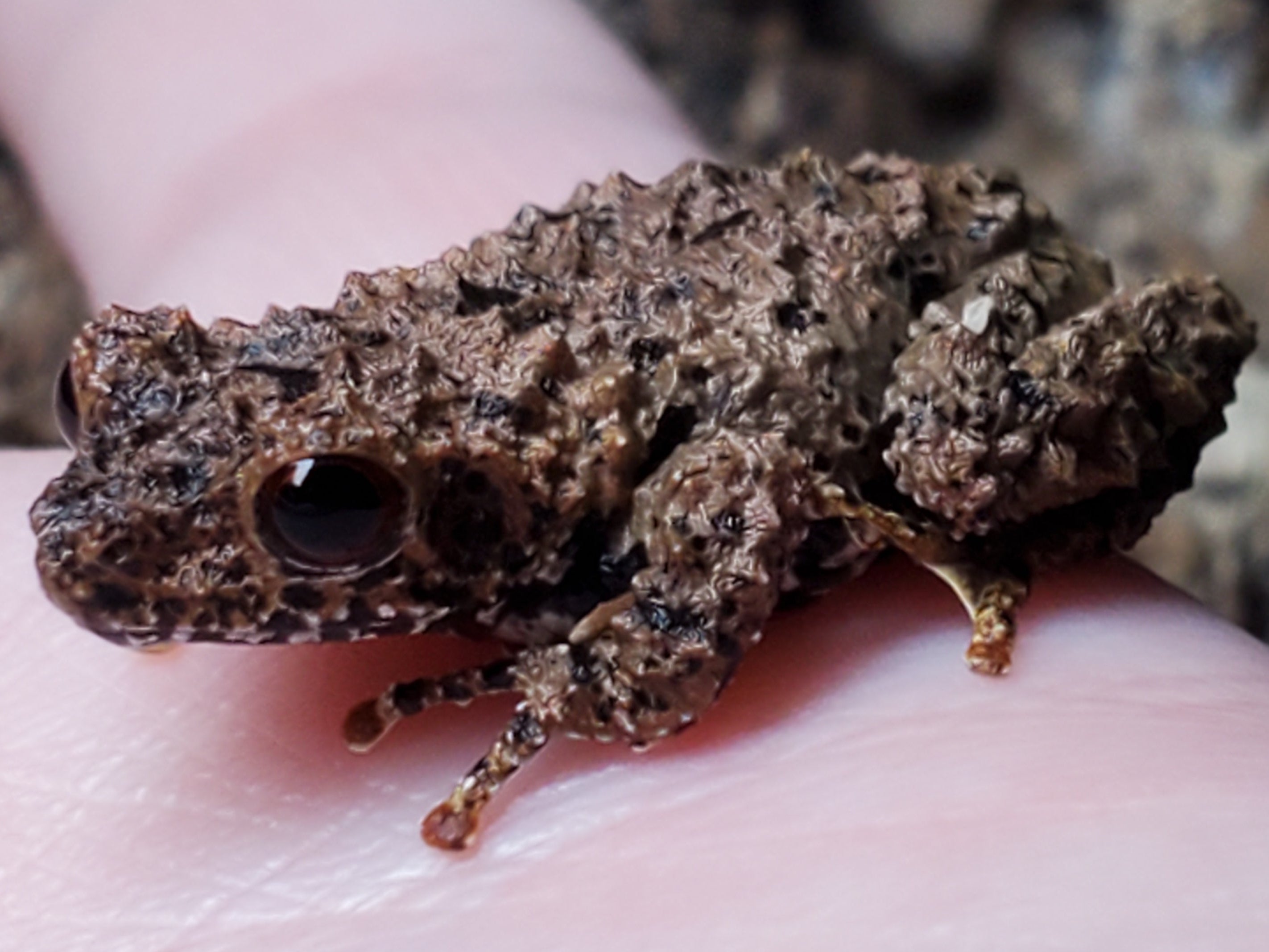
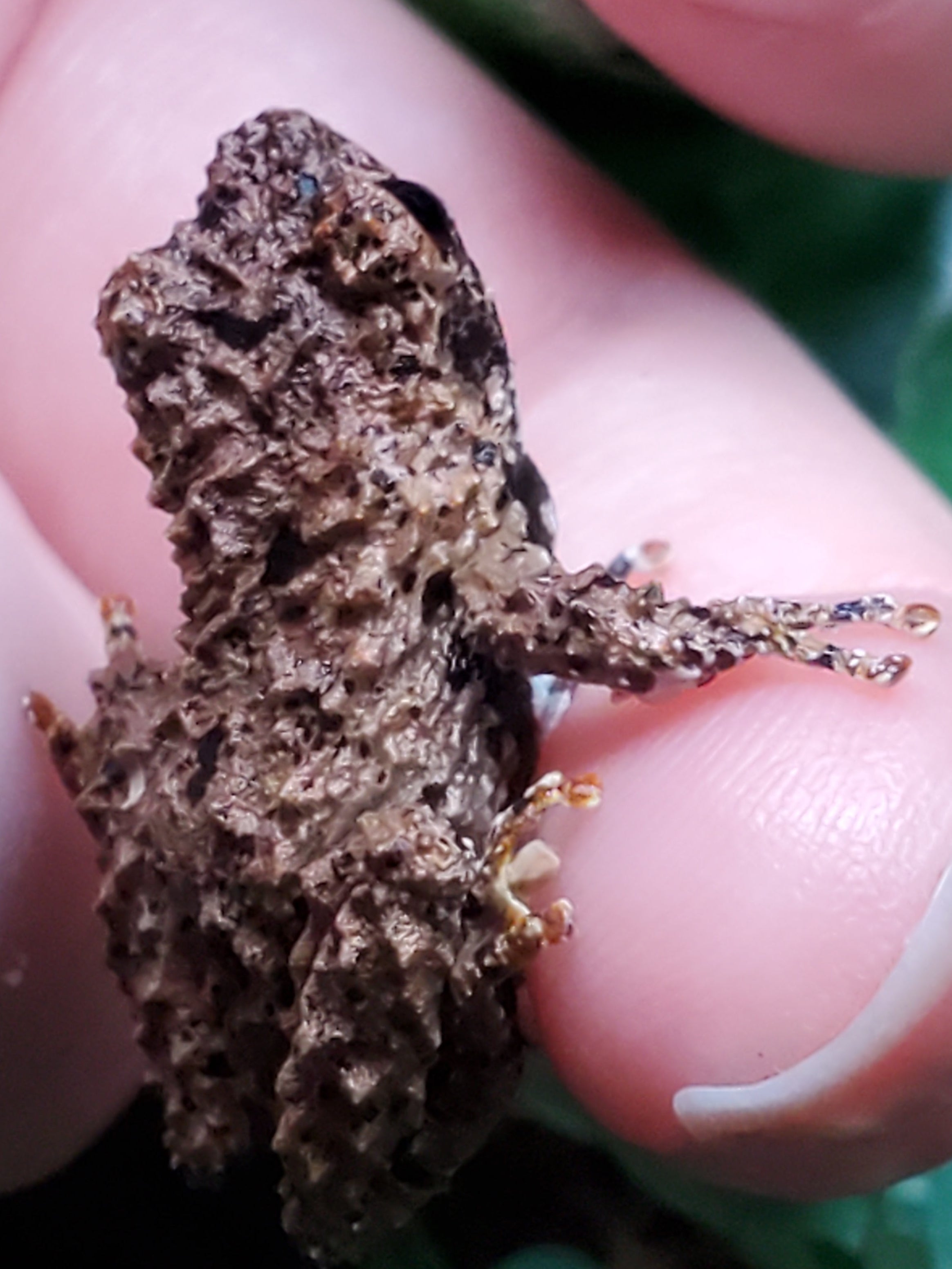
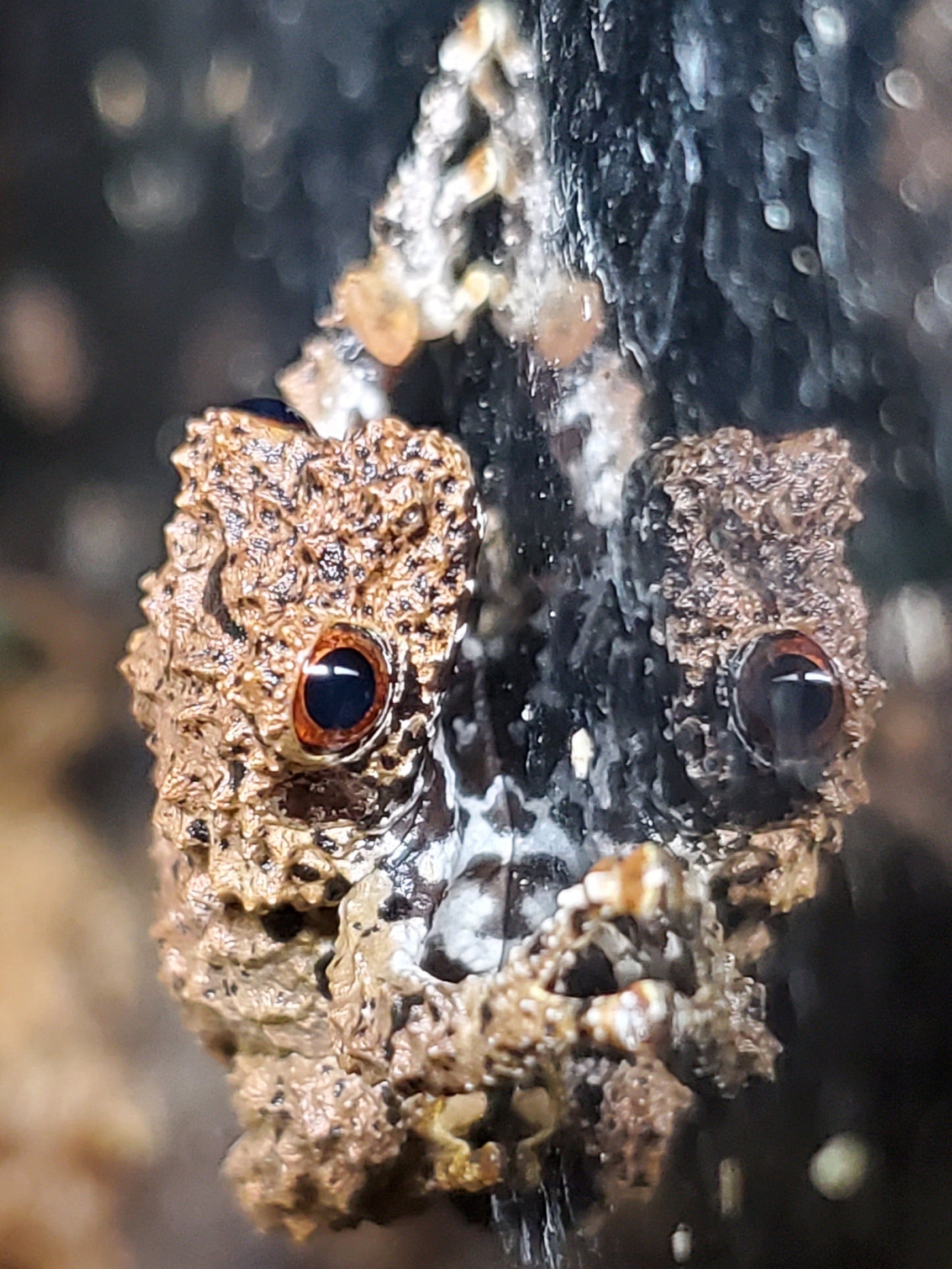
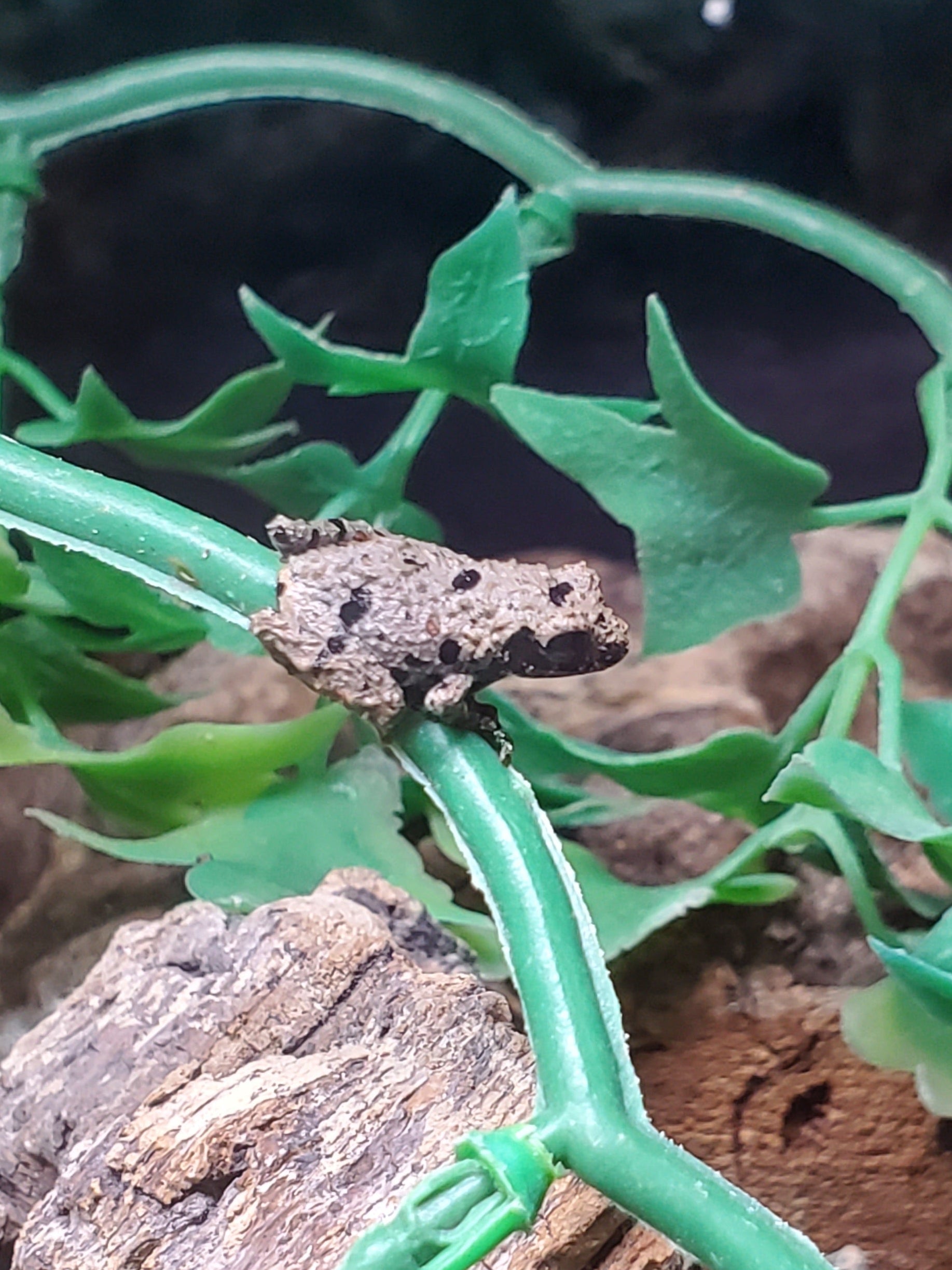
Rainette moussue de Chine
Nom scientifique : Theloderma rhododiscus
Nom commun : Rainette moussue de Chine
Aperçu de l'espèce
Taille : Les adultes atteignent généralement 2,5 à 3 cm (1 à 1,25 pouce), les femelles étant légèrement plus grandes.
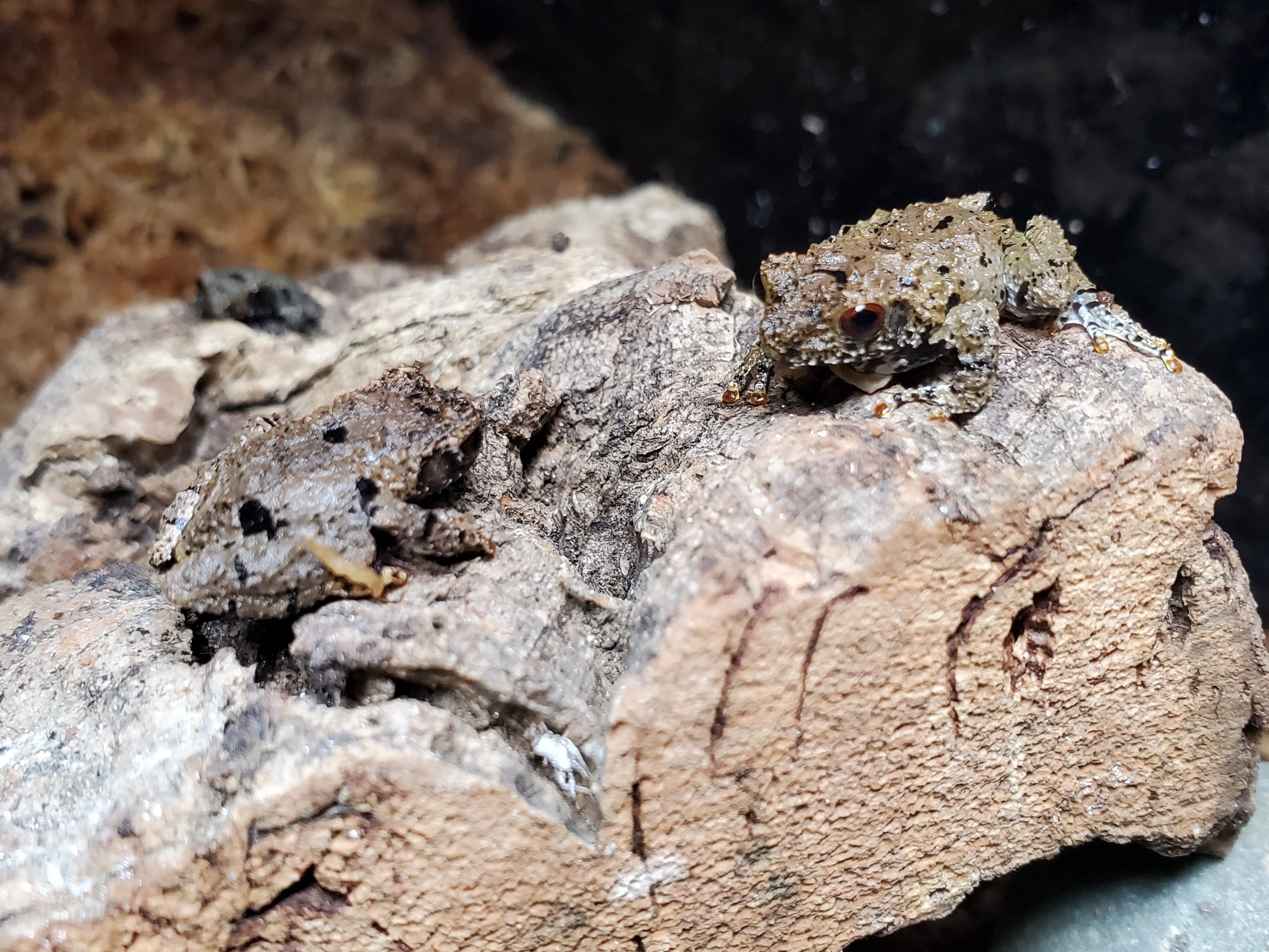
Apparence : La rainette moussue de Chine est une minuscule espèce fortement camouflée avec une texture rugueuse et tuberculée sur le dos. Sa coloration va des verts et bruns profonds aux mouchetures noires, souvent accentuées par des disques distinctifs rougeâtres ou rosâtres sur les membres ou le dos, sa caractéristique la plus reconnaissable. La peau ressemble à de la mousse ou du lichen, lui permettant de se fondre dans des surfaces humides et texturées. Les yeux sont grands par rapport à la taille du corps, généralement cuivrés ou dorés, avec des pupilles horizontales. Les membres sont minces avec de petits coussinets d'adhérence adaptés pour agripper l'écorce et les roches moussues.
Distribution : Originaire du sud de la Chine et du nord du Vietnam, généralement dans les forêts montagnardes avec une humidité fraîche et stable.
Habitat : On la trouve dans les zones de suintement rocheuses, les entrées de grottes ruisselantes, les parois rocheuses couvertes de mousse et les microhabitats forestiers ombragés avec une humidité propre constante. Cette espèce est spécialisée dans les environnements à températures fraîches et à eau ruisselante riche en oxygène.
Comportement : Nocturnes, secrètes et se déplaçant lentement, les rainettes moussues de Chine restent immobiles pendant la journée. Elles comptent entièrement sur le camouflage pour leur défense. La nuit, elles explorent les surfaces rocheuses ou moussues à la recherche de nourriture. Elles sont très sensibles à la chaleur et à l'humidité stagnante.
Soins en captivité
Terrarium : Un adulte seul ou un petit groupe se développe bien dans un terrarium de 30 × 30 × 45 cm (12 × 12 × 18 pouces), tandis que les groupes plus importants bénéficieront d'une installation de 45 × 45 × 60 cm (18 × 18 × 24 pouces). Cette espèce se porte le mieux avec un système à base d'eau filtrée : créez un faux fond ou une couche de drainage avec un réservoir d'eau filtrée et oxygénée en dessous. Installez un petit filtre interne ou éponge pour maintenir une eau propre et en mouvement. Au-dessus, prévoyez des rondins de liège surélevés, des panneaux rocheux texturés, des écorces couvertes de mousse et des rebords où les grenouilles restent au-dessus de l'eau libre. Ajoutez des poches de sphaigne ou de litière de feuilles uniquement sur des surfaces surélevées, pas à la base. Incorporez une paroi ruisselante, une fonction de suintement ou une barre de pluie pour créer une humidité constante et ruisselante, reproduisant fidèlement leur environnement naturel.
Température et humidité :
Température ambiante : 18 à 22°C (65 à 72°F)
Zone chaude : jusqu'à 23°C (74°F)
Température nocturne : 15 à 20°C (60 à 68°F)
Humidité : 80 à 100 %, maintenue par des brumisations fréquentes et l'humidité évaporative du réservoir d'eau.
Éclairage : Fournir une faible lumière UVB (environ 2 %) avec un éclairage tamisé et diffus. Éviter la lumière vive ou directe.
Régime alimentaire : Offrez de très petits insectes tels que des drosophiles, des collemboles, des grillons nouveau-nés, de minuscules blattes et des isopodes. Complétez les proies avec du calcium et des multivitamines.
Comportement en captivité : Les rainettes moussues de Chine prospèrent dans des terrariums frais, propres et très structurés. Elles restent inactives une grande partie de la journée et deviennent plus exploratrices la nuit. Elles apprécient les structures denses et les zones ombragées. La manipulation est fortement déconseillée en raison de leur petite taille et de leur peau sensible.
Considérations spéciales :
• Manipulez uniquement avec des gants humides sans poudre ou un filet doux et humide ; des grenouilles aussi petites peuvent être facilement blessées.
• Maintenez des températures fraîches — la surchauffe est extrêmement dangereuse pour cette espèce.
• Utilisez de l'eau filtrée et riche en oxygène ; l'eau stagnante favorise les agents pathogènes.
• Fournissez de nombreuses surfaces moussues et texturées pour le repos et le camouflage.
• Assurez une ventilation efficace pour éviter l'humidité stagnante.
• Utilisez uniquement de l'eau déchlorée ou de l'eau osmosée pour la brumisation et les éléments aquatiques.
• Sécurisez soigneusement le terrarium — ces grenouilles sont assez petites pour passer par de très petits interstices.
Note sur la taxonomie
Theloderma rhododiscus appartient à la famille des Rhacophoridae et fait partie du groupe des grenouilles moussues connues pour leur camouflage extrême, leur petite taille et leur dépendance vis-à-vis des environnements ruisselants et saturés. Elle se distingue des autres Theloderma par les "disques" rougeâtres caractéristiques et une taille adulte extrêmement petite.
Note sur la génétique
Il n'existe pas de morphotypes reconnus pour Theloderma rhododiscus. La variation naturelle apparaît dans l'intensité des taches rouges, la marbrure dorsale et la distribution des tubercules, mais aucune ne représente des morphotypes génétiques définis.
Estimer la livraison