


Avis de non-responsabilité concernant les photos
Description
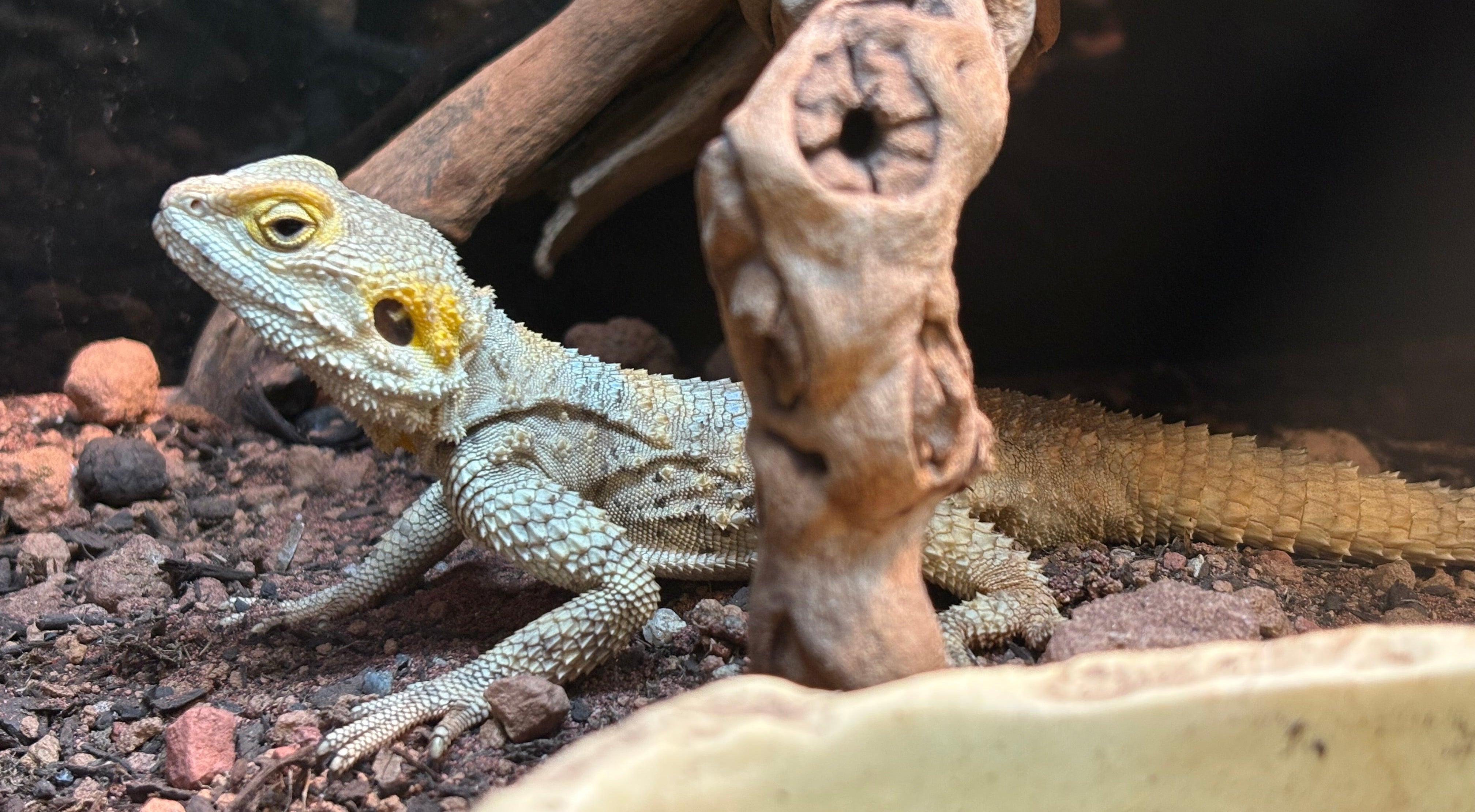
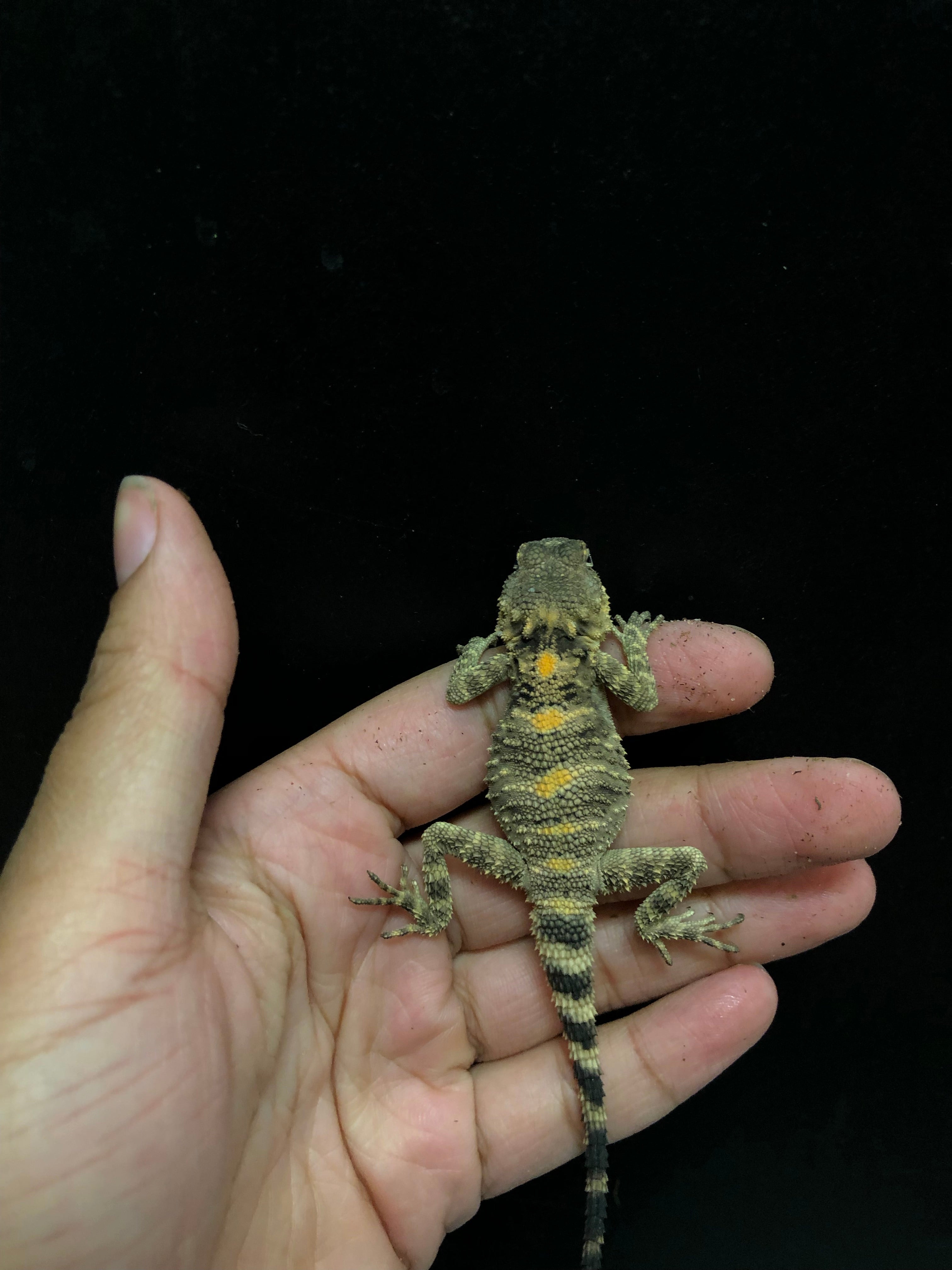
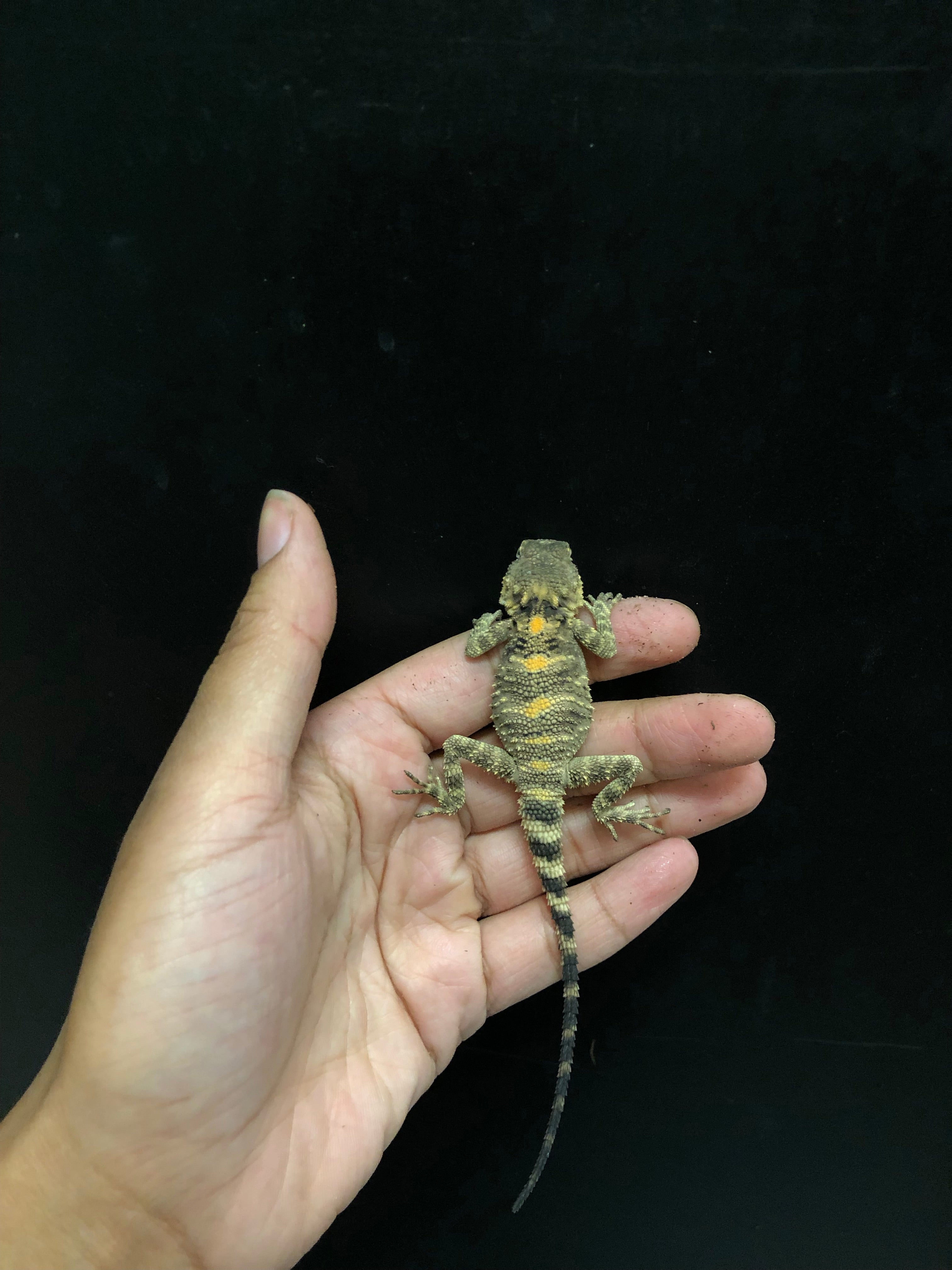
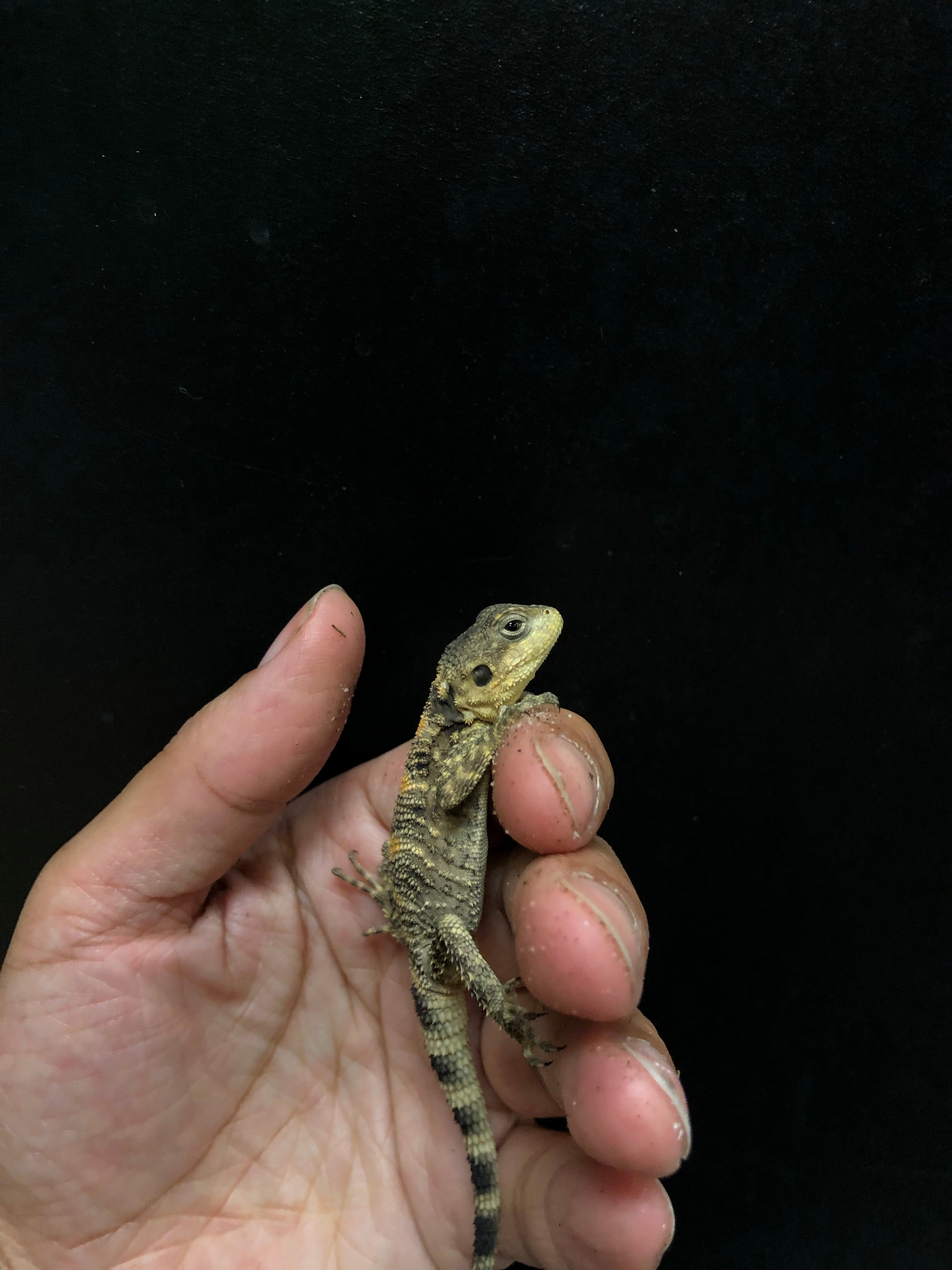
Painted Agama
Scientific Name: Laudakia stellio
Common Name: Painted Agama, Stellion
Species Overview
Size: Adults typically reach 10 to 14 inches (25 to 36 cm) in total length, with males often displaying slightly larger heads and more robust builds.
Appearance: The Painted Agama is a striking, rugged lizard known for its bold patterning and sharply keeled scales. Their base colour ranges from sandy beige or olive to slate grey, overlaid with dark blotches, crossbands, or speckling. Males may show intense orange, yellow, or blue highlights during breeding season, especially on the head and throat. The spiny appearance along the body and tail is characteristic of the genus. Their powerful limbs and broad head give them a sturdy, athletic look suited to rocky terrain.
Distribution: Found across the eastern Mediterranean and Middle East, including Greece, Turkey, Cyprus, Syria, Lebanon, Israel, Jordan, and Egypt.
Habitat: Painted Agamas inhabit rocky hillsides, stone walls, ruins, arid shrubland, and dry open forest edges. They are highly adapted to sun-exposed, rocky environments with many crevices for basking and retreating.
Behaviour: These lizards are diurnal, territorial, and active climbers. Painted Agamas are quick and alert, often seen basking on high rocks before retreating into cracks when threatened. They are primarily insectivorous but may consume flowers, leaves, and berries. Males display dominance with head-bobbing, push-ups, and rapid colour intensification.
Captive Care
Enclosure: Provide a terrestrial enclosure at least 36 × 18 × 18 inches (90 × 45 × 45 cm) for one adult, with a larger 4 × 2 × 2 feet (120 × 60 × 60 cm) setup preferred for groups or enhanced space. Include stacked rocks, ledges, slate slabs, and multiple basking sites to recreate a rocky hillside environment. Ensure all rock structures are securely anchored.
Temperature and Humidity:
Basking area: 105 to 115°F (40 to 46°C)
Warm side: 90 to 95°F (32 to 35°C)
Cool side: 75 to 82°F (24 to 28°C)
Night temperatures: 65 to 72°F (18 to 22°C)
Humidity should remain low, ideally 20 to 40 percent.
Lighting: Provide strong full-spectrum lighting with high-output UVB (10 to 12 percent). This species thrives under bright, intense lighting that replicates its sun-drenched natural habitat.
Diet: Offer a varied insectivorous diet including crickets, roaches, black soldier fly larvae, mealworms, superworms, and silkworms. Occasional greens, flowers, and soft fruits can be added. Supplement with calcium frequently and multivitamins weekly.
Behaviour in Captivity: Painted Agamas are energetic and highly alert. They enjoy climbing, basking, and exploring elevated surfaces. They may become bold with routine care but can remain skittish if handled frequently. A well-structured environment allows them to display natural territorial and basking behaviours.
Special Considerations:
• Provide secure rock structures—they are strong climbers and diggers.
• Maintain low humidity to prevent respiratory issues.
• Avoid excessive handling; they stress easily and prefer a display-style setup.
• Offer multiple basking points to reduce territorial disputes in group setups.
Taxonomy Note
The Painted Agama belongs to the genus Laudakia, a group of rugged, rock-dwelling agamids distributed across arid and mountainous regions of Eurasia. Laudakia stellio is one of the most recognizable species due to its bold patterning and adaptability.
Genetics Note
No recognized morphs exist for this species. Natural variation includes changes in banding clarity, colour saturation, and the presence of seasonal male breeding colours. These differences reflect normal individual and locality-based diversity rather than selective breeding.