

Avis de non-responsabilité concernant les photos
Description
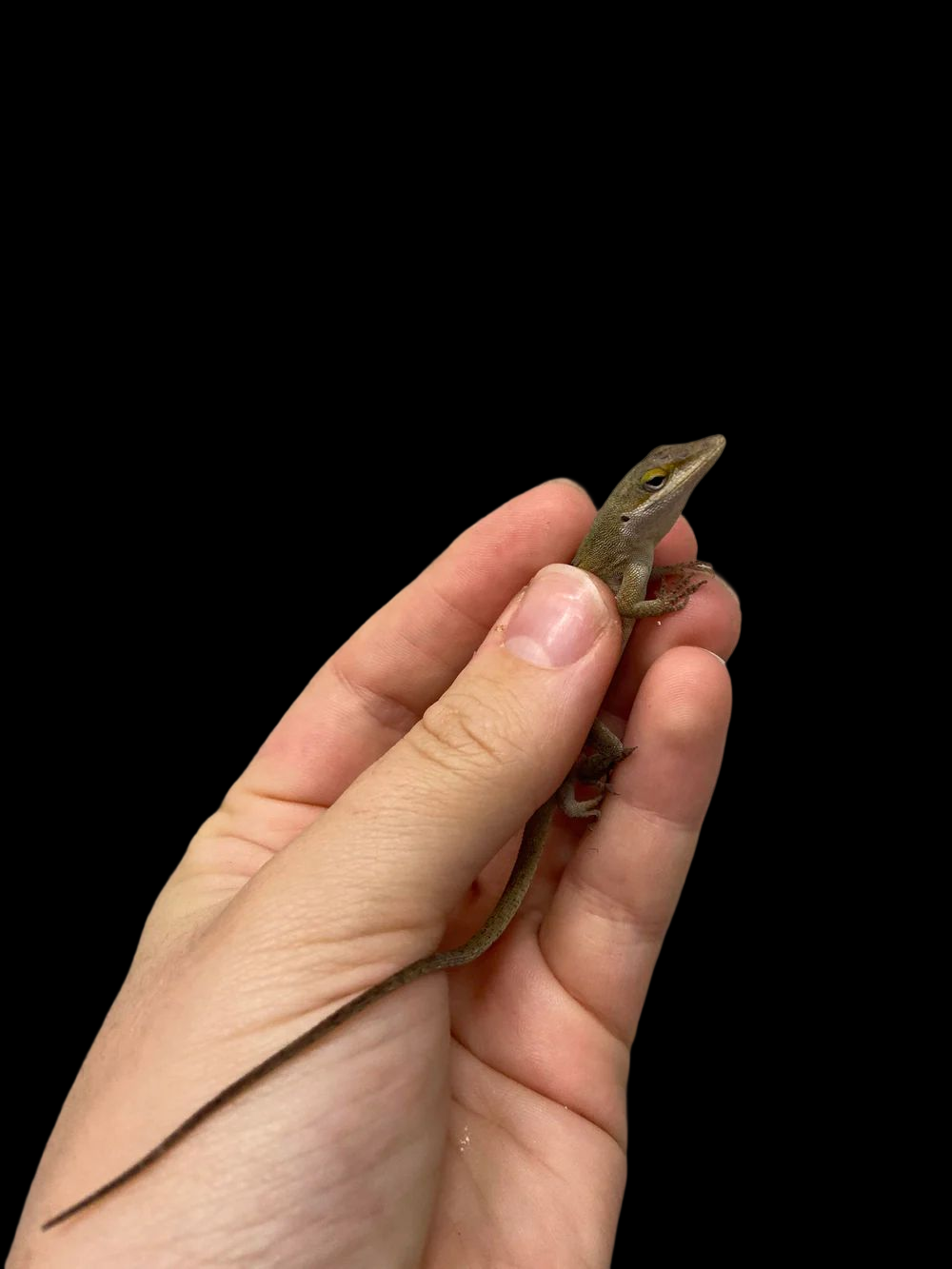
Anolis vert (Anolis carolinensis)
Nom scientifique : Anolis carolinensis
Nom commun : Anolis vert, Anolis de Caroline
Aperçu de l'espèce
Taille : Les adultes atteignent généralement 5 à 8 pouces (13 à 20 cm) de longueur totale, les mâles étant plus grands et plus robustes que les femelles.
Apparence : Les Anolis verts sont des lézards arboricoles élancés capables de passer du vert vif au brun selon la température, l'humeur et les conditions environnementales. Les mâles ont un fanon proéminent allant du rose au rouge, utilisé pour la parade nuptiale, tandis que les femelles conservent souvent une légère bande dorsale. Leurs corps sont adaptés à l'escalade, avec de longs membres et des coussinets adhésifs sur les orteils. Lorsqu'ils se prélassent ou sont excités, les individus peuvent intensifier leur couleur verte ou révéler de subtiles tonalités bleuâtres autour de la tête.
Distribution : Originaire du sud-est des États-Unis, y compris la Floride, la Géorgie, les Carolines, l'Alabama, le Mississippi, la Louisiane et l'est du Texas, avec des populations introduites ailleurs.
Habitat : Cette espèce habite des environnements chauds et humides tels que les forêts, les marécages, les jardins et les broussailles. Ils vivent principalement dans la végétation basse à moyenne et nécessitent une structure abondante pour l'escalade.
Comportement : Les Anolis verts sont diurnes, territoriaux et expressifs visuellement. Les mâles utilisent des hochements de tête, des pompes et des déploiements de fanon pour communiquer leur dominance. Ils se nourrissent d'insectes et de petits invertébrés et comptent sur leur agilité et leur camouflage pour leur sécurité. Ils sont rapides, alertes et réactifs aux changements environnementaux.
Soins en captivité
Enclos : Fournir un enclos orienté verticalement d'au moins 18 pouces × 18 pouces × 24 pouces (45 × 45 × 60 cm) pour un seul individu ou un couple. Inclure de hautes branches, des vignes, de l'écorce de liège et un feuillage dense. Des perchoirs d'exposition en hauteur et une couverture visuelle sont essentiels.
Température et humidité :
Zone de bain de soleil : 90–95°F (32–35°C)
Température ambiante : 75–85°F (24–29°C)
Températures nocturnes : 68–72°F (20–22°C)
Maintenir l'humidité à 60–80%, avec une vaporisation quotidienne et une forte ventilation.
Éclairage : Fournir un éclairage lumineux à spectre complet avec un UVB modéré (5–10%). Un bon éclairage favorise l'expression des couleurs, la réponse alimentaire et le métabolisme du calcium.
Régime alimentaire : Nourrir de petits insectes tels que des grillons, des nymphes de cafards, des drosophiles, des larves de mouche soldat noire et de petits vers de farine. Les juvéniles doivent être nourris quotidiennement, tandis que les adultes peuvent être nourris tous les 1 à 2 jours. Utiliser régulièrement des suppléments de calcium et de multivitamines.
Comportement en captivité : Les Anolis verts prospèrent dans des enclos plantés avec un espace vertical et des cachettes. Ils sont farouches et ne conviennent pas à une manipulation fréquente, mais ils deviennent des animaux d'exposition confiants avec des conditions stables. Les mâles doivent être logés seuls pour éviter les conflits.
Considérations spéciales :
• Fournir des branches de diamètres variés pour encourager l'escalade naturelle.
• Éviter le surpeuplement, car la compétition stresse les animaux.
• Maintenir une humidité constante pour une mue et une hydratation correctes.
• S'assurer que l'enclos est sécurisé et bien ventilé.
Note taxonomique
L'Anolis vert appartient à la famille des Dactyloidae, un groupe de lézards à orientation visuelle connus pour leur signalisation du fanon et leur variation de couleur. Anolis carolinensis est l'un des anolis les plus reconnaissables et la seule espèce indigène des États-Unis.
Note génétique
Il n'y a pas de morphes officiellement reconnues pour l'Anolis vert. La variation naturelle au sein de l'espèce inclut des différences d'intensité de vert, des tons de tête bleuâtres occasionnels, et la présence ou l'absence d'une bande dorsale chez les femelles. Ces différences se produisent naturellement au sein des populations et ne représentent pas des lignées de morphes établies.
Estimer la livraison