

Avis de non-responsabilité concernant les photos
Description
Gecko des maisons
Nom scientifique : Hemidactylus spp.
Nom commun : Gecko des maisons
Aperçu de l'espèce
Taille : Les geckos des maisons adultes atteignent généralement une longueur totale de 9 à 13 cm (3,5 à 5 pouces), bien que la taille puisse varier légèrement selon l'espèce. Ce sont des lézards minces et agiles, avec une peau douce et translucide et de longues queues adaptées à l'équilibre et aux mouvements rapides.
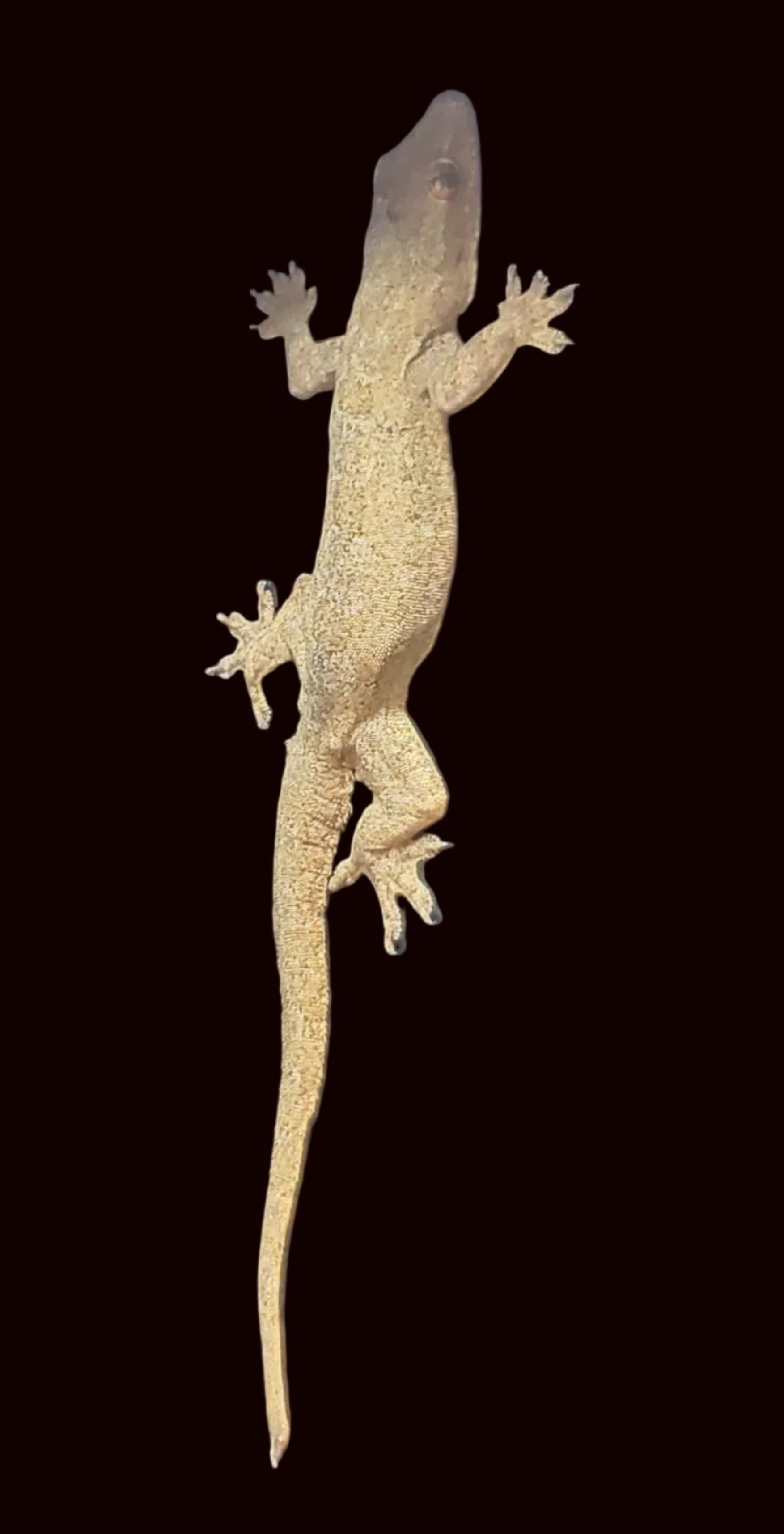
Apparence : Les geckos des maisons sont de petits geckos de construction légère avec une peau lisse et de grands yeux sans paupières qui varient du doré au gris avec des pupilles verticales. La coloration va du beige clair ou fauve au gris doux ou brun, souvent avec de subtiles taches ou de légères rayures. De nombreux individus présentent une légère translucidité, en particulier le long de la queue et des membres, et leur ton peut légèrement changer en fonction de l'humeur ou de l'éclairage. Les doigts sont munis de coussinets adhésifs, ce qui leur permet de grimper sur des surfaces verticales lisses, y compris le verre.
Distribution : Le genre Hemidactylus est répandu en Afrique, en Asie et dans les régions tropicales du monde entier. De nombreuses espèces se sont établies dans des environnements urbains bien au-delà de leurs aires de répartition natives, y compris en Amérique du Nord et dans les Caraïbes, où on les trouve fréquemment autour des bâtiments, des lumières et des jardins.
Habitat : Dans la nature, les geckos des maisons habitent les environnements naturels et urbains. On les trouve souvent sur les murs, sous les avant-toits ou près des lumières où les insectes se rassemblent. Ils préfèrent les zones chaudes et humides avec un accès facile à un abri. En captivité, ils prospèrent dans des enclos simples qui offrent chaleur, surfaces d'escalade et humidité modérée.
Comportement : Les geckos des maisons sont nocturnes, rapides et opportunistes. Ce sont des grimpeurs habiles et sont souvent observés chassant les insectes près des sources lumineuses après le crépuscule. Bien que généralement non agressifs, ils sont très territoriaux envers les autres mâles. Ils sont mieux appréciés comme animaux de vitrine actifs plutôt que pour la manipulation.
Soins en captivité
Enclos : Prévoir un enclos mesurant au moins 30 × 30 × 45 cm (12 × 12 × 18 pouces) pour un seul individu ou un couple. Inclure des surfaces d'escalade verticales telles que de l'écorce de liège, des branches et des plantes artificielles. Une installation naturaliste est facultative mais contribue à encourager un comportement naturel.
Température et humidité : Maintenir une température côté chaud de 28 à 31 °C (82 à 88 °F) avec une zone plus fraîche d'environ 23 à 26 °C (74 à 78 °F). Les températures nocturnes peuvent chuter en toute sécurité à 21 à 23 °C (70 à 74 °F). Maintenir l'humidité entre 60 et 80 %, obtenue par des pulvérisations régulières et une ventilation adéquate.
Éclairage : Fournir un éclairage UVB faible à modéré (2-5 %) sur un cycle jour/nuit de 12 heures. Bien que nocturnes, les geckos des maisons bénéficient d'une faible exposition aux UVB pour le métabolisme du calcium et la santé générale.
Alimentation : Nourrir avec une alimentation variée d'insectes de petite taille, chargés en nutriments, tels que des grillons, des blattes et des drosophiles. Offrir occasionnellement des vers de cire ou des larves de mouches soldat en guise de friandises. Saupoudrer régulièrement toutes les proies avec des suppléments de calcium et de multivitamines. Les juvéniles doivent être nourris quotidiennement ; les adultes tous les 2 à 3 jours.
Comportement en captivité : Ces geckos sont robustes, actifs et faciles à entretenir. Ils s'adaptent bien à la vie en captivité lorsqu'ils bénéficient d'une chaleur et d'une humidité stables. Ils sont rapides et doivent plutôt être observés que manipulés. Avec des soins constants, ils peuvent vivre 5 à 8 ans en captivité.
Considérations spéciales : Éviter la manipulation, car ils sont délicats et peuvent perdre leur queue en cas de stress. Maintenir un enclos sécurisé, car ce sont des grimpeurs habiles et des artistes de l'évasion rapides.
Note de taxonomie
Le nom « Gecko des maisons » fait généralement référence aux membres du genre Hemidactylus, qui comprend plus de 150 espèces. Les espèces couramment rencontrées en captivité et autour des habitations humaines comprennent le gecko des maisons méditerranéen (H. turcicus), le gecko des maisons commun (H. frenatus) et le gecko des maisons tropical (H. mabouia). Comme ces espèces sont visuellement similaires et souvent mélangées dans le commerce, les individus sont généralement vendus sous le nom collectif de « Gecko des maisons ».
Note de génétique
Il n'y a pas de morphs reconnus d'espèces d'Hemidactylus dans le commerce des reptiles. Cependant, des variations de couleur naturelles se produisent au sein et entre les populations, allant des tons sable pâle aux bruns et gris plus foncés selon la région, l'éclairage et l'habitat. Ces différences sont naturelles et non des traits sélectionnés par reproduction.