


Avis de non-responsabilité concernant les photos
Description
Tortue géographique du Mississippi
Nom scientifique : Graptemys pseudogeographica kohni
Nom commun : Tortue géographique du Mississippi
Présentation de l'espèce
Taille : Les mâles atteignent généralement 9 à 13 cm (3,5 à 5 pouces), tandis que les femelles sont nettement plus grandes, mesurant 15 à 25 cm (6 à 10 pouces).
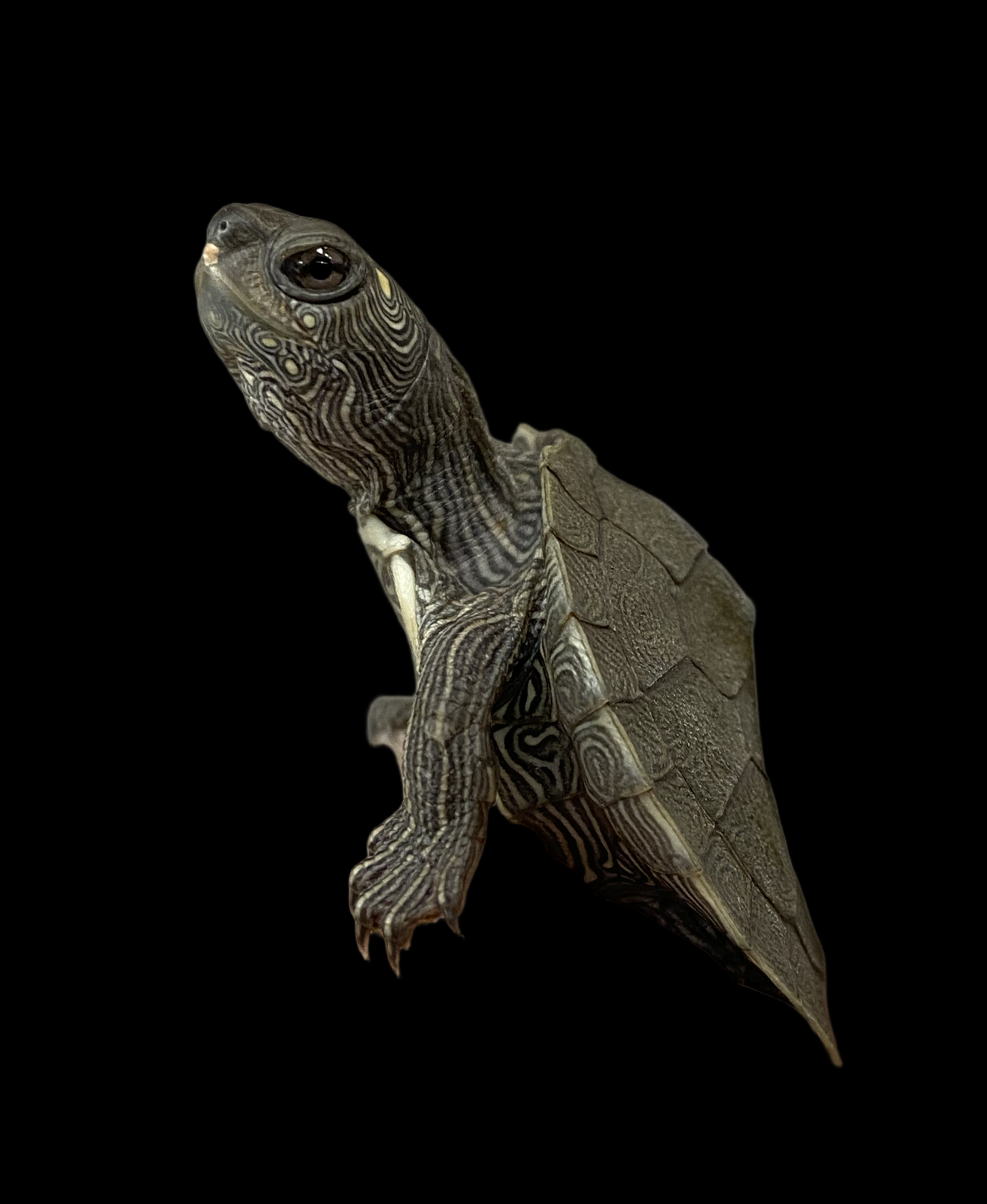
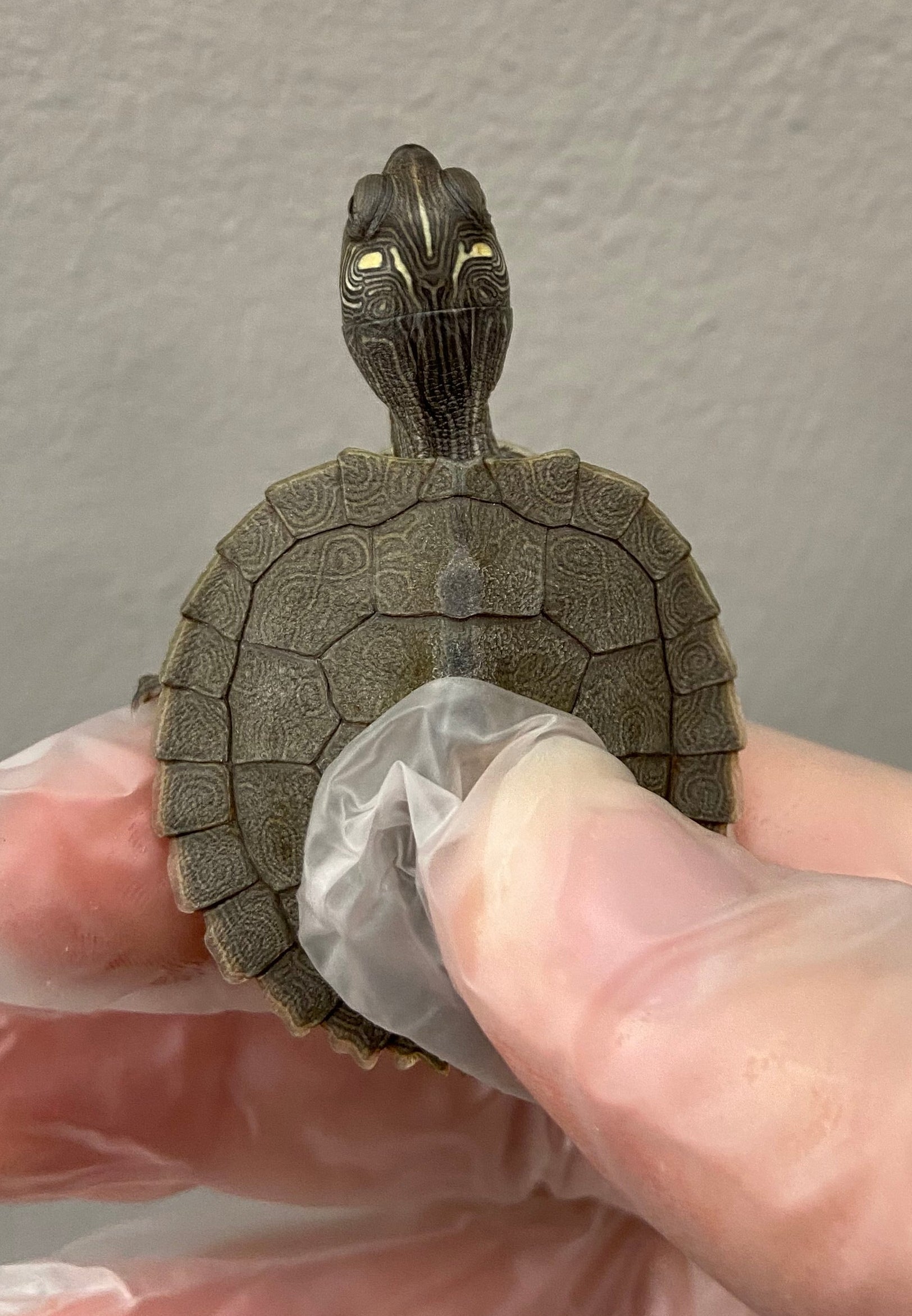
Apparence : La tortue géographique du Mississippi est connue pour le motif complexe, semblable à une carte, sur sa carapace olive à brune, avec des lignes jaunes ou fauves plus claires traçant chaque écaille. Les marginales arrière sont dentelées, surtout chez les jeunes individus. La tête présente de larges rayures jaunes et des marques distinctives en forme de croissant derrière les yeux. Les femelles développent des têtes plus larges pour écraser les escargots et les crustacés, tandis que les mâles conservent des têtes plus petites et plus étroites. Le plastron est pâle avec des marques subtiles le long des sutures.
Distribution : Présente dans tout le bassin du Mississippi, s'étendant à travers des États tels que le Minnesota, le Wisconsin, l'Illinois, le Missouri, le Mississippi et la Louisiane.
Habitat : Dans la nature, cette espèce occupe les grandes rivières, les bras morts, les zones de remous et les cours d'eau avec un courant modéré. Elles préfèrent les zones avec de nombreuses structures pour la thermorégulation et une végétation aquatique abondante. En captivité, elles nécessitent une installation aquatique spacieuse avec une filtration puissante et des plateformes de thermorégulation solides.
Comportement : Les tortues géographiques du Mississippi sont diurnes, d'excellentes nageuses et se prélassent fréquemment. Elles sont généralement timides mais peuvent devenir plus confiantes avec des soins routiniers. Elles se déplacent rapidement dans l'eau et apprécient les zones de courant fort lorsqu'elles sont disponibles.
Soins en captivité
Enclos : Prévoir un enclos aquatique d'une surface minimale de 120 × 60 cm (48 × 24 pouces) pour une femelle adulte ; les mâles peuvent être maintenus dans des installations plus petites, avec un minimum de 90 × 45 cm (36 × 18 pouces). Offrir de l'eau profonde pour la nage, du bois flotté, des roches, des plateformes flottantes et des cachettes submergées. Une filtration puissante est essentielle en raison de leur sensibilité à la qualité de l'eau.
Température et humidité :
Température de l'eau : 24 à 27 °C (75 à 80 °F)
Zone de thermorégulation : 32 à 35 °C (90 à 95 °F)
Température ambiante de l'air : 26 à 29 °C (78 à 84 °F)
Éclairage : Fournir un éclairage à spectre complet avec 10-12 % d'UVB pour soutenir la santé de la carapace et un métabolisme du calcium adéquat. Assurer une zone de thermorégulation sûre et stable qui sèche complètement.
Alimentation : Offrir un régime omnivore varié comprenant des insectes, des vers de terre, des escargots, des crustacés, des invertébrés aquatiques, des granulés commerciaux pour tortues, des légumes verts à feuilles et des plantes aquatiques. Les femelles bénéficient occasionnellement de proies à carapace dure en raison de leurs mâchoires plus fortes.
Comportement en captivité : Les tortues géographiques du Mississippi sont des nageuses actives et se prélassent fréquemment. Elles ont tendance à être prudentes mais deviennent progressivement plus visibles et confiantes. Elles prospèrent dans des enclos avec du courant, une structure abondante et de l'eau propre.
Considérations spéciales
• Très sensible à la mauvaise qualité de l'eau ; la filtration doit être robuste.
• Les femelles nécessitent plus d'espace en raison de leur taille adulte plus grande.
• Fournir plusieurs options de thermorégulation et des zones avec un léger courant.
• Offrir occasionnellement des proies à carapace dure, surtout pour les femelles.
Note de taxonomie
La tortue géographique du Mississippi est une sous-espèce au sein du complexe Graptemys pseudogeographica. Elle se distingue de la tortue géographique par ses croissants oculaires caractéristiques et ses rayures céphaliques plus prononcées.
Note de génétique
Il n'y a pas de morphs reconnus pour la tortue géographique du Mississippi. Les variations des marques de la tête, de la couleur de la carapace et de la clarté du motif se produisent naturellement chez les individus et reflètent la diversité régionale plutôt que l'élevage sélectif.