


Avis de non-responsabilité concernant les photos
Description
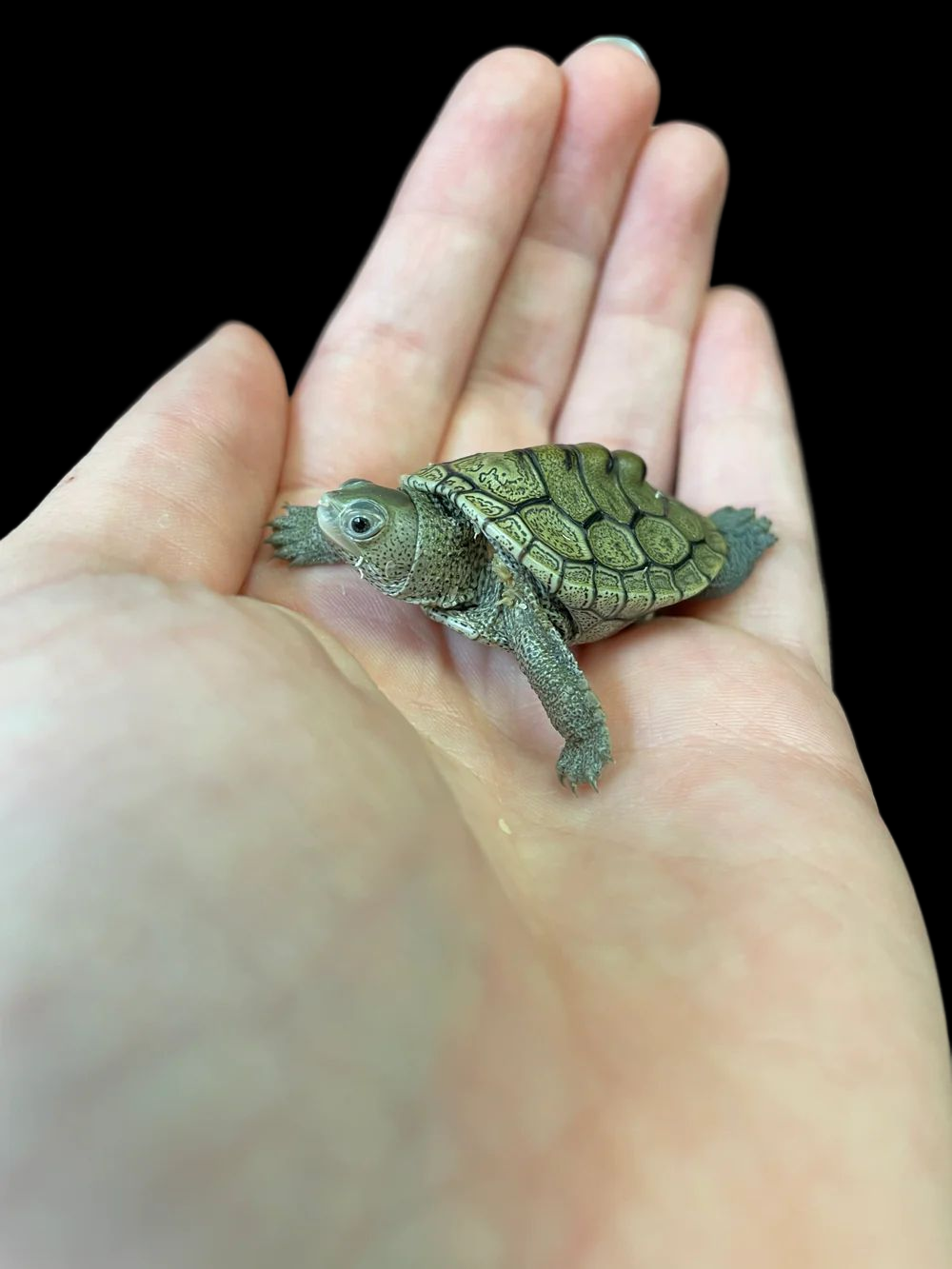
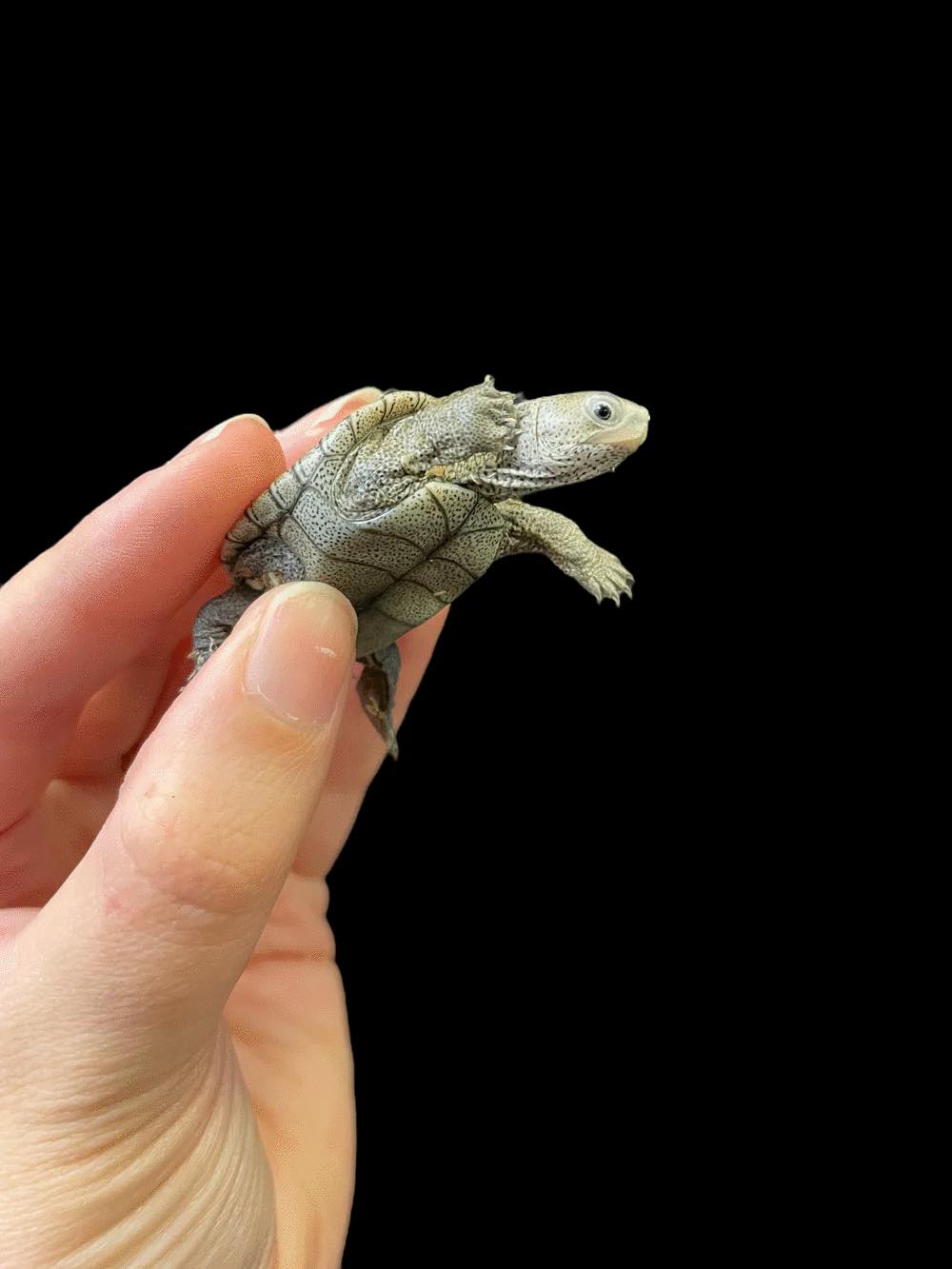
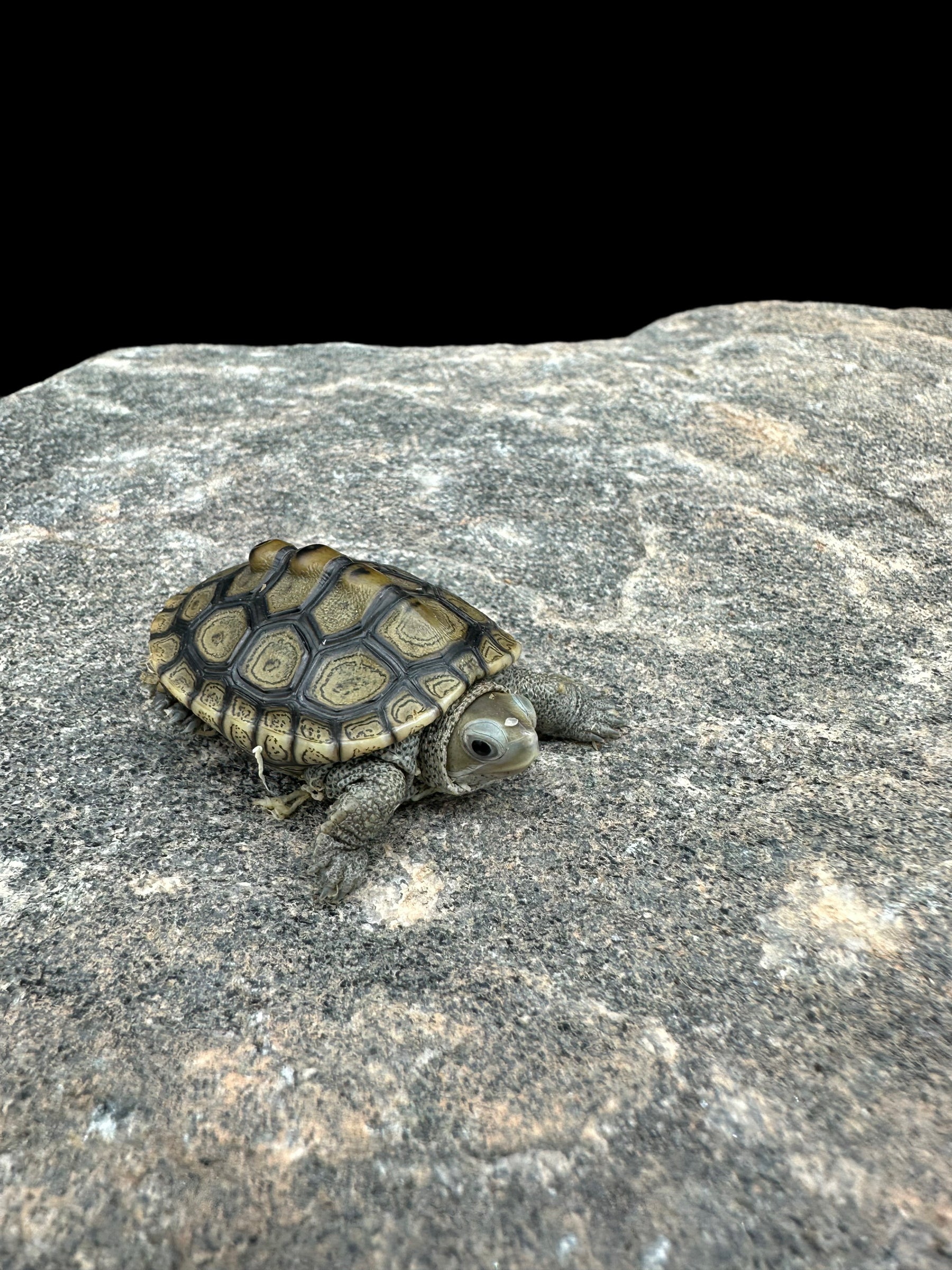
Tortue terrapène de Caroline ornée × terrapène diamantine
Nom scientifique : Malaclemys terrapin macrospilota × Malaclemys terrapin
Nom commun : Terrapène ornée × hybride de terrapène diamantine
(Note : Les deux parents sont des terrapènes, pas des tortues-boîtes. Cet hybride est entièrement du genre Malaclemys, combinant deux variétés régionales.)
Présentation de l'espèce
Taille : Les mâles atteignent généralement 11 à 15 cm (4,5 à 6 pouces), tandis que les femelles sont plus grandes, de 15 à 20 cm (6 à 8 pouces). La taille adulte ressemble souvent au plus grand des parents.
Apparence : Cet hybride mélange les caractéristiques de la tortue terrapène de Caroline ornée (M. t. macrospilota) et d'autres formes de tortues terrapènes diamantine, produisant des individus avec une carapace lisse et modérément bombée présentant des marbrures ornées, des motifs tourbillonnants ou des marques d'écussons en forme de diamant adoucies dans des tons de gris, de beige, de brun ou de charbon. La coloration de la tête varie du gris clair à l'ardoise foncée avec des marbrures noires, brunes ou crème, tandis que les membres peuvent montrer des taches ou des bandes vives selon l'influence parentale. Le plastron varie généralement du jaune pâle au crème avec des taches variables. L'apparence générale peut varier de très tachetée et très contrastée à plus douce et pastel, selon les traits parentaux qui sont exprimés le plus fortement.
Distribution : Cet hybride n'existe pas à l'état sauvage. Il n'existe que par l'élevage en captivité entre différentes localités de la tortue terrapène diamantine.
Habitat : Comme les deux parents sont des terrapènes, l'hybride conserve le même héritage d'eau saumâtre, bien qu'en captivité il soit gardé exclusivement en eau douce. Il privilégie naturellement les environnements aquatiques peu profonds à modérément profonds avec un léger courant, de nombreuses possibilités de bronzage et une structure immergée.
Comportement : Ces hybrides sont diurnes, de grands nageurs et très alertes. Ils se prélassent fréquemment et présentent le tempérament confiant et interactif commun à de nombreuses tortues terrapènes diamantine. Ils peuvent devenir particulièrement audacieux en vieillissant, s'approchant souvent des gardiens pendant l'alimentation.
Soins en captivité
Enclos : Fournir un enclos aquatique avec une surface minimale de 120 × 60 cm (48 × 24 pouces) pour un adulte, offrant un espace de nage profond, des bûches ou des rebords immergés, des plates-formes flottantes, des plantes aquatiques et une couverture ombragée. Les terrapènes ont besoin de plates-formes de bronzage solides et stables et bénéficient d'un mouvement d'eau modéré. La filtration doit être robuste en raison de l'activité élevée et de la production de déchets.
Température et humidité :
Température de l'eau : 24 à 27 °C (75 à 80 °F)
Zone de bain de soleil : 32 à 35 °C (90 à 95 °F)
Température ambiante de l'air : 26 à 29 °C (78 à 84 °F)
Éclairage : Fournir un éclairage à spectre complet avec 10 à 12 % d'UVB pour favoriser le développement de la carapace et un métabolisme calcique adéquat. Assurer une zone de bain de soleil entièrement sèche et des sections aquatiques ombragées pour la régulation de la température.
Régime alimentaire : Offrir un régime omnivore varié comprenant des insectes, des vers de terre, des escargots, des crevettes, des poissons, des crustacés, des granulés de tortue aquatique de haute qualité et des légumes-feuilles ou des plantes aquatiques ; les hybrides présentent souvent des instincts alimentaires de terrapène fortement axés sur les protéines, mais bénéficient toujours de matière végétale pour l'équilibre.
Comportement en captivité : Ces hybrides sont actifs, attachants et affichent souvent un comportement de nage et de bain de soleil prononcé. Ils s'adaptent bien à une eau propre et chaude et à des environnements structurés. De nombreux individus deviennent confiants et interactifs, surtout au moment des repas.
Considérations spéciales
• Nécessite une excellente filtration et des conditions d'eau propre.
• Prévoir plusieurs sites de bronzage et des zones de repos immergées.
• Les terrapènes sont sujettes aux problèmes de peau et de carapace dans l'eau sale — l'entretien est essentiel.
• L'hébergement extérieur n'est possible que dans les climats chauds avec des installations à l'épreuve des prédateurs et à forte humidité.
Note taxonomique
Cet hybride est un croisement entre deux localités de la terrapène diamantine, toutes deux appartenant au genre Malaclemys. Étant donné que les deux parents sont des terrapènes, l'expression de l'hybride est plus prévisible que celle des hybrides inter-genres, bien que la variation des taches, du contraste de la carapace et des marbrures faciales reste significative.
Note génétique
Il n'existe pas de morphotypes reconnus pour les hybrides de terrapène de Caroline ornée × terrapène diamantine. Les variations de la forme de la carapace, de l'intensité de la couleur, des motifs et des marbrures de la tête sont des résultats naturels des différences de localité des parents plutôt que des traits génétiques sélectifs.