
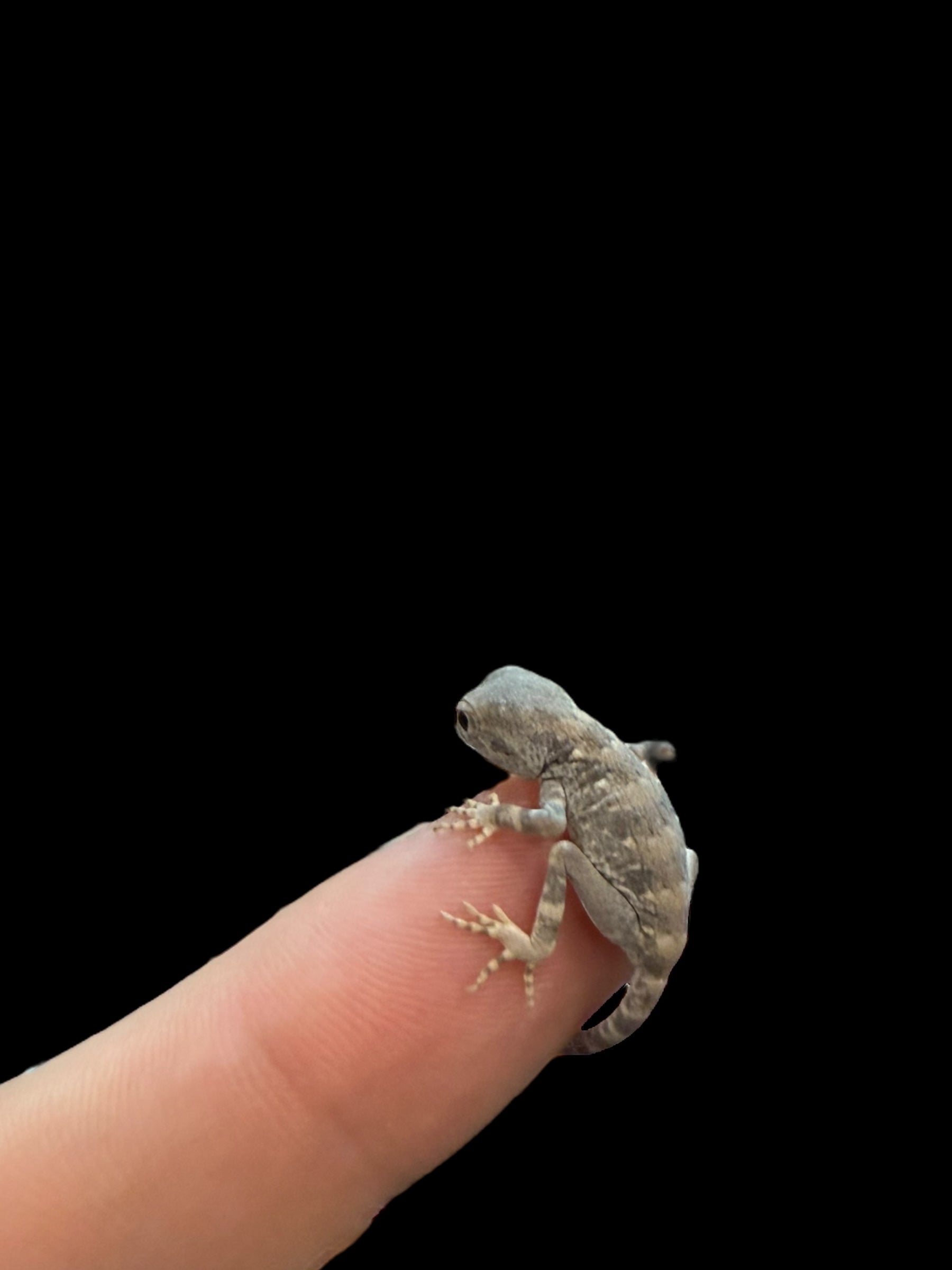
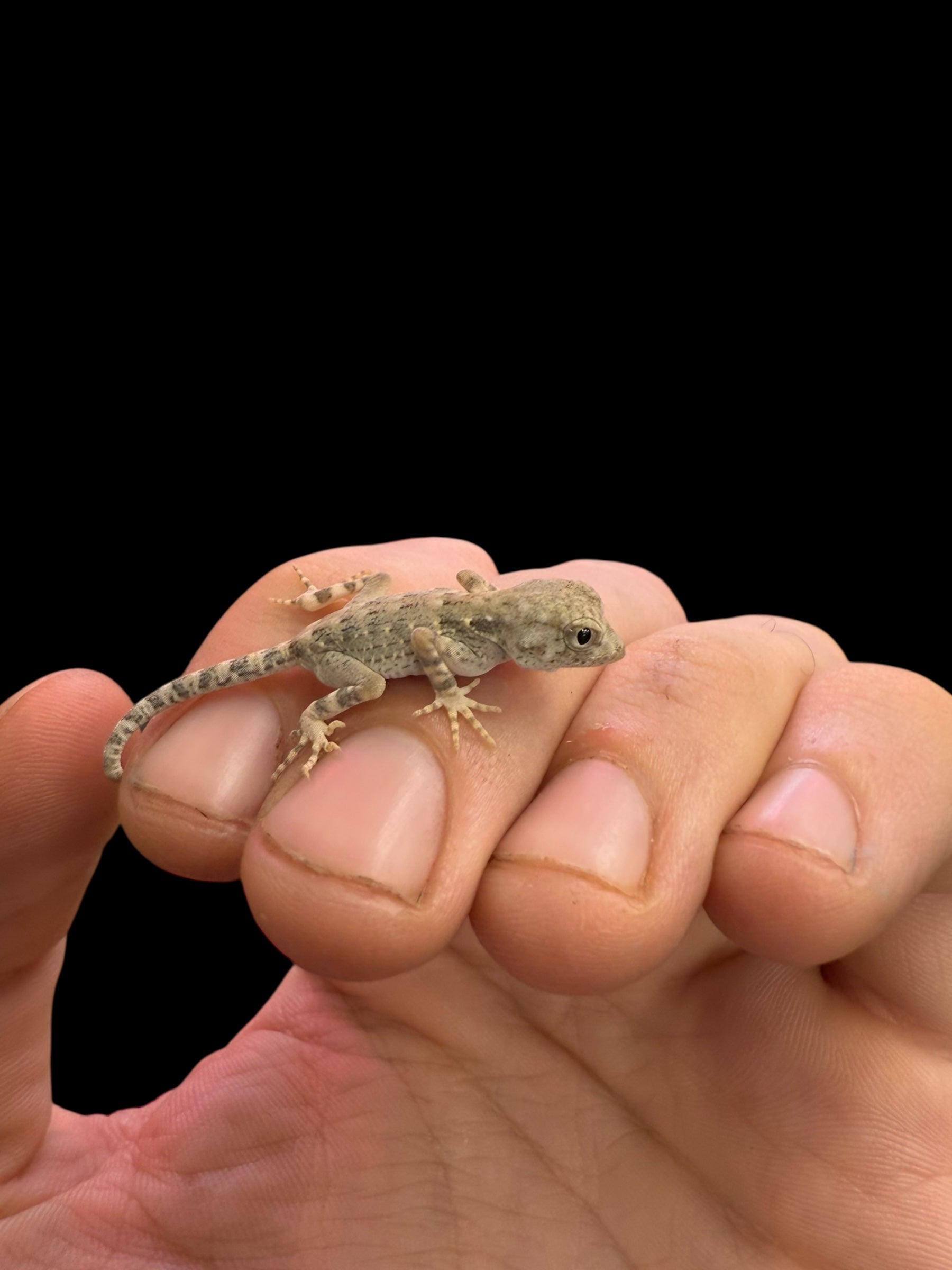
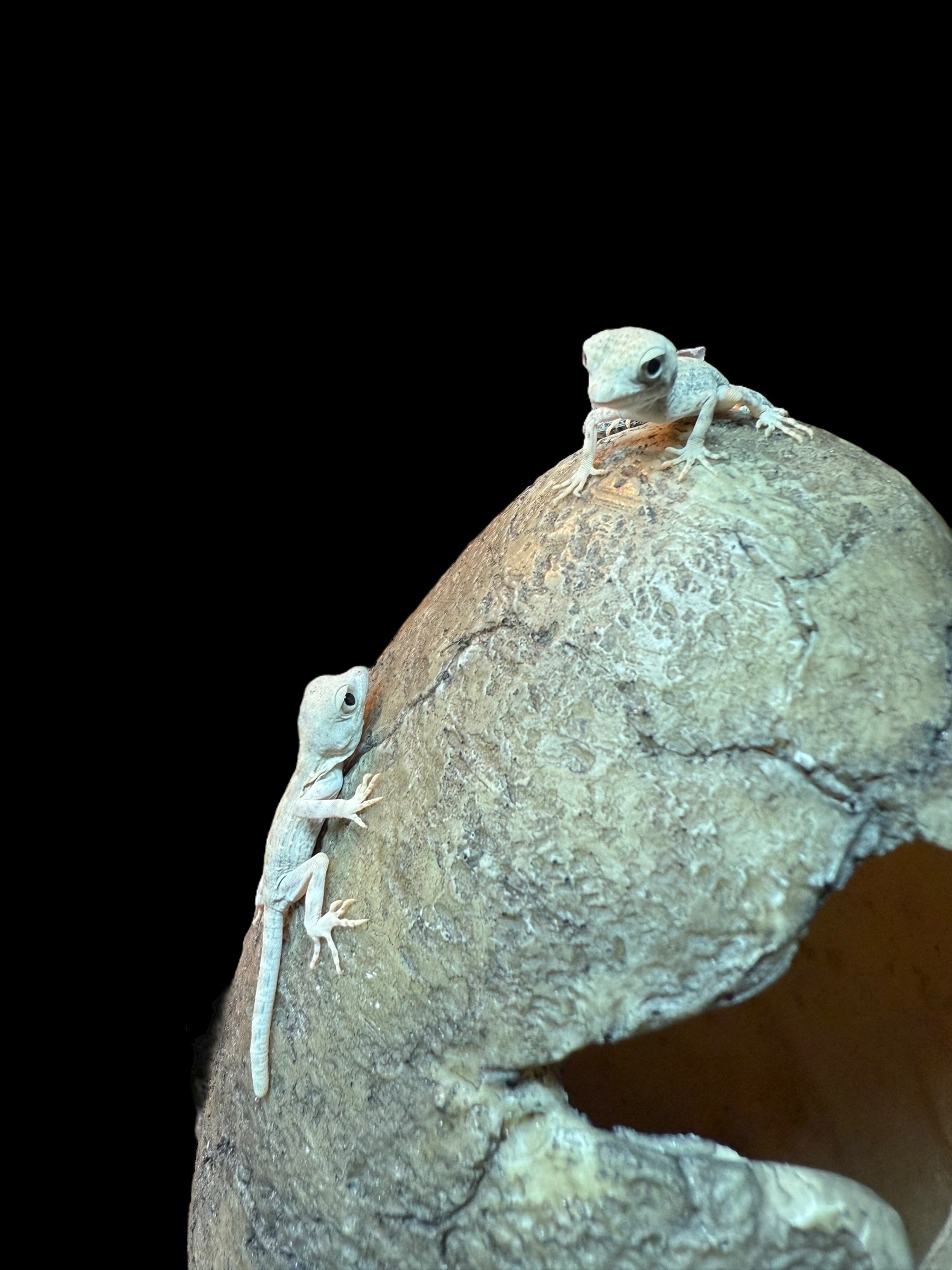
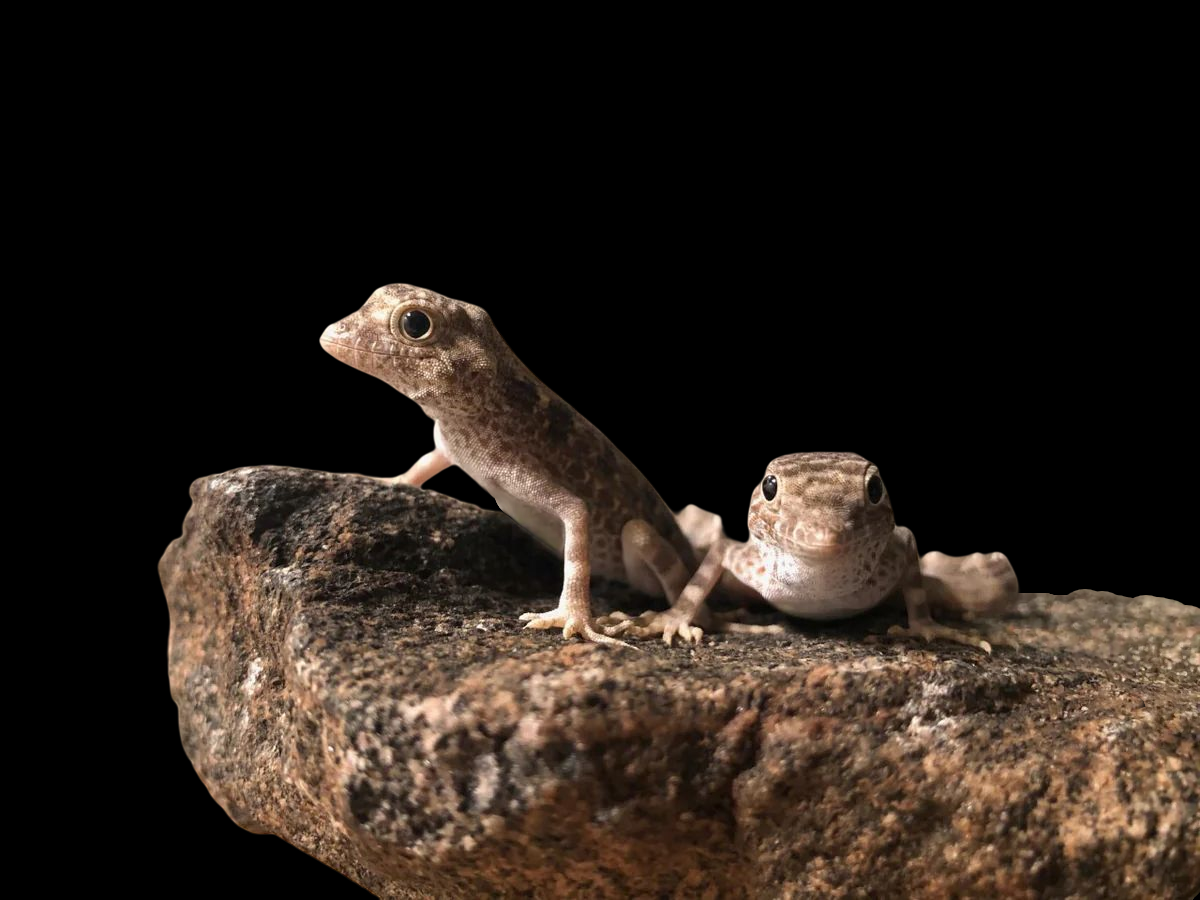


Avis de non-responsabilité concernant les photos
Description
Gecko à queue de scorpion (Pristurus carteri)
Nom scientifique : Pristurus carteri
Nom commun : Gecko à queue de scorpion
Aperçu de l'espèce
Taille : Les adultes atteignent généralement 6 à 9 cm (2,5 à 3,5 pouces) de longueur totale, ce qui en fait une petite espèce délicate au sein du genre Pristurus.
Apparence : Le gecko à queue de scorpion se caractérise par une silhouette élancée et fine avec une tête étroite et une longue queue effilée souvent relevée et enroulée, rappelant un scorpion, ce qui donne son nom à l'espèce. La coloration varie du beige sable au gris chaud, avec des mouchetures dispersées ou de légères bandes qui se fondent bien dans la roche et le sol du désert. Leurs membres sont fins mais agiles, et les mâles présentent souvent des bases de queue légèrement plus épaisses et de subtiles différences de motifs.
Distribution : Originaire du nord-est de l'Afrique et de la péninsule arabique, en particulier des régions côtières et rocheuses du Yémen, d'Oman et des zones environnantes.
Habitat : Dans la nature, cette espèce habite les paysages arides et semi-arides, y compris les plateaux rocheux, les lisières du désert, les oueds et les falaises côtières. Ils s'abritent sous les pierres ou dans les crevasses pendant les fortes chaleurs. En captivité, ils prospèrent dans des installations sèches et spacieuses avec des surfaces texturées et de nombreuses possibilités de cachettes.
Comportement : Les geckos à queue de scorpion sont diurnes à crépusculaires, une caractéristique unique parmi de nombreux geckos. Ils sont actifs, alertes et territoriaux, en particulier les mâles. Leurs mouvements sont rapides et précis, souvent accompagnés d'une posture de la queue utilisée pour la communication. Ils conviennent mieux comme animaux de présentation en raison de leur petite taille et de leur vitesse.
Soins en captivité
Enclos : Un enclos à orientation horizontale mesurant au moins 45 cm × 30 cm × 30 cm (18 pouces × 12 pouces × 12 pouces) convient pour un couple ou un petit groupe, bien que les mâles ne doivent pas être hébergés ensemble. Fournissez des roches empilées, des morceaux d'ardoise, de petites branches et des surfaces à texture fine qui permettent une escalade et une perche naturelles.
Température et humidité : Maintenez un côté chaud de 32 à 35 °C (90 à 95 °F) avec une zone plus fraîche d'environ 24 à 27 °C (75 à 80 °F). Les températures nocturnes peuvent chuter à 20 à 22 °C (68 à 72 °F). L'humidité doit rester basse, entre 20 et 35 %, avec un air sec et une excellente ventilation.
Éclairage : Fournissez un éclairage à spectre complet avec un UVB faible à modéré (2 à 5 %) pendant 10 à 12 heures par jour. En tant que gecko diurne, l'accès aux UVB est bénéfique et contribue de manière significative au comportement naturel et à la santé osseuse.
Régime alimentaire : Offrez une sélection d'insectes de taille appropriée tels que des grillons à tête d'épingle, de petits cafards, des drosophiles, des coléoptères de haricots et des micro-vers de farine. En raison de leur petite taille, les aliments doivent être minuscules et offerts fréquemment. Les juvéniles peuvent nécessiter une alimentation quotidienne, tandis que les adultes peuvent être nourris tous les 1 à 2 jours. Toutes les proies doivent être nourries et légèrement saupoudrées de suppléments de calcium et de multivitamines. Une source d'eau peu profonde ou une légère pulvérisation peut fournir une hydratation.
Comportement en captivité : Une fois acclimatés, ces geckos sont très actifs et fascinants à observer. Ils effectuent des démonstrations de queue, des courses rapides et des comportements de balayage depuis une perche. Ils apprécient les zones de bain de soleil ouvertes et les étagères de roche plates.
Considérations spéciales : Leur petite taille et leur vitesse rendent la manipulation déconseillée. Les enclos doivent être à l'épreuve des évasions avec des mailles fines ou des couvercles bien ajustés. Les mâles doivent être séparés pour éviter les conflits.
Note de taxonomie
Le gecko à queue de scorpion appartient au genre Pristurus, souvent appelé geckos sémaphores en raison de leurs comportements distinctifs de levée de queue et de signalisation. Ce genre est principalement diurne et adapté aux environnements arides, ce qui les distingue de nombreux autres groupes de geckos.
Note de génétique
Il n'existe pas de morphs ou de variantes sélectionnées reconnus du gecko à queue de scorpion. La variation naturelle est subtile et s'exprime généralement par de légères différences de ton et de mouchetures sur leur aire de répartition géographique.