


Avis de non-responsabilité concernant les photos
Description
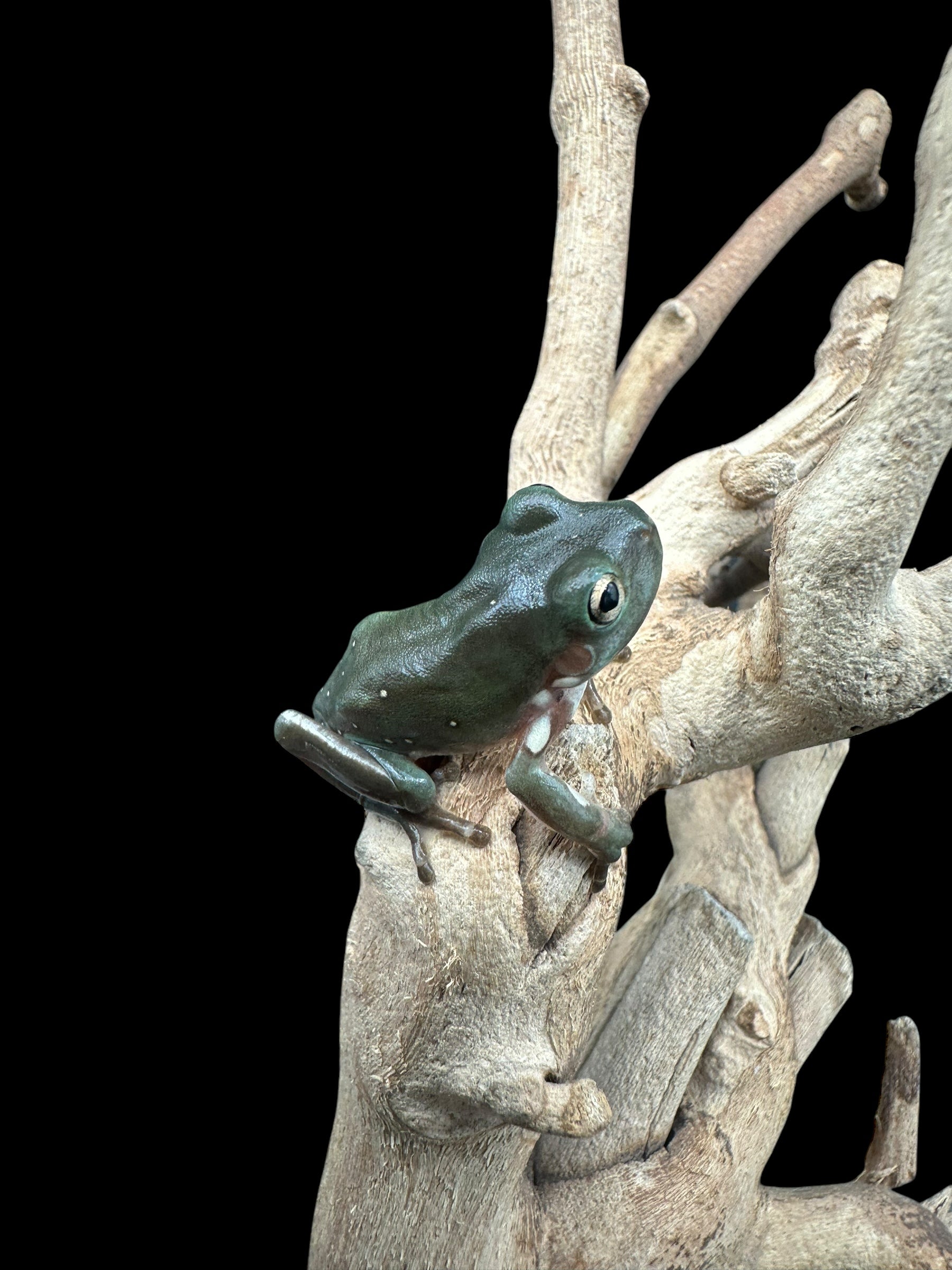
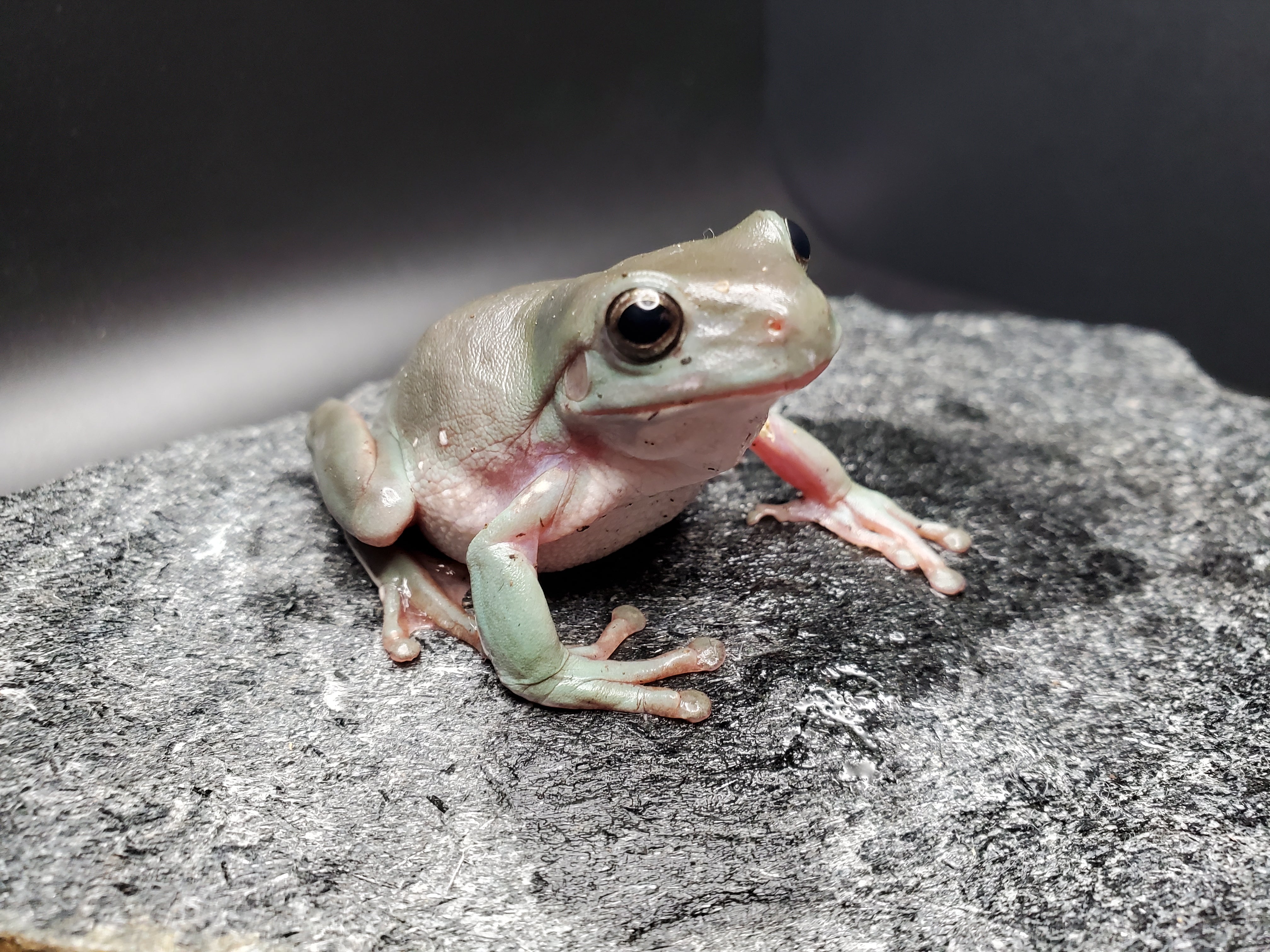
Rainette de White (Normale)
Nom scientifique : Pelodryas caerulea
Nom commun : Rainette de White, Rainette verte australienne
Aperçu de l'espèce
Taille : Les adultes atteignent généralement 7,5 à 11,5 cm (3 à 4,5 pouces), les femelles étant légèrement plus grandes.
Apparence : La rainette de White normale présente l'apparence classique de l'espèce. Sa peau est lisse, épaisse et légèrement cireuse, et sa couleur varie du vert vif au bleu-vert ou au sarcelle doux selon l'humeur, l'éclairage et la variation individuelle. Certaines grenouilles présentent de légères taches ou des reflets crème le long des flancs, tandis que d'autres sont uniformément colorées. Le corps est arrondi et trapu, avec des membres musclés et de grands coussinets adhésifs aux orteils, adaptés à l'escalade. Les yeux sont généralement dorés ou bronze avec des pupilles horizontales.
Distribution : Originaire d'Australie, d'Indonésie et de Papouasie-Nouvelle-Guinée.
Habitat : Dans la nature, les rainettes de White habitent les forêts, les lisières de bois, les zones ripariennes, les affleurements rocheux et même les habitations humaines. Elles privilégient les lieux de repos ombragés et surélevés tels que les creux d'arbres, la végétation et les crevasses.
Comportement : Calmes, robustes et généralement tolérantes à l'observation, ces grenouilles sont nocturnes et deviennent actives après le crépuscule. Elles grimpent facilement, se perchent dans des espaces élevés et vocalisent dans des conditions humides. Elles sont connues pour leur tempérament doux et leur adaptabilité aux environnements captifs.
Soins en captivité
Enclos : Un seul adulte ou un petit groupe se développe bien dans un enclos de 45 × 45 × 60 cm (18 × 18 × 24 pouces), tandis que les groupes plus grands bénéficient d'une installation de 60 × 45 × 60 cm (24 × 18 × 24 pouces). Fournissez des branches solides, des rondins de liège, des lianes et de grandes feuilles pour créer des chemins verticaux et des lieux de repos sécurisés. Utilisez un substrat retenant l'humidité mais bien drainé, comme de la fibre de coco, des mélanges de terreau ou des mélanges de sphaigne. Incluez un grand bassin d'eau peu profond, car ces grenouilles se trempent fréquemment.
Température et humidité :
Température ambiante : 24 à 28 °C (75 à 82 °F)
Zone chaude : 29 à 30 °C (84 à 86 °F)
Température nocturne : 21 à 23 °C (70 à 74 °F)
Humidité : 50 à 80 %, maintenue par des brumisations régulières avec une bonne ventilation.
Éclairage : Fournir une faible à modérée UVB (2 à 5 %) et un éclairage plein spectre lumineux et diffus.
Alimentation : Offrez des insectes de taille moyenne à grande tels que des grillons, des blattes, des larves de mouches soldat noires, des vers à soie, des vers à corne et occasionnellement des vers de farine. Complétez la nourriture avec du calcium et des multivitamines.
Comportement en captivité : Les rainettes de White normales s'adaptent bien aux enclos naturalistes ou semi-plantés. Elles deviennent actives la nuit, grimpent, explorent et montrent de fortes réponses alimentaires. Bien qu'elles tolèrent mieux la manipulation que de nombreux amphibiens, celle-ci doit rester minimale.
Considérations spéciales :
• Ne manipulez qu'avec des gants humides et sans poudre pour protéger leur peau sensible.
• Assurez une forte circulation de l'air — cette espèce est sujette aux problèmes respiratoires si elle est maintenue dans une humidité stagnante.
• Évitez un substrat constamment saturé ; maintenez l'humidité par des cycles de brumisation et de séchage.
• Fournissez des éléments décoratifs d'escalade robustes pouvant supporter leur poids.
• Utilisez uniquement de l'eau déchlorée ou de l'eau osmosée pour le trempage et la brumisation.
• Surveillez régulièrement l'état corporel en raison de la prédisposition de l'espèce à l'obésité.
Note de taxonomie
Pelodryas caerulea est un membre de la famille des Pelodryadidae et est étroitement liée à d'autres espèces de grenouilles arboricoles d'Australie et de Nouvelle-Guinée. Sa robustesse, son tempérament doux et son adaptabilité ont contribué à sa popularité dans le commerce des animaux de compagnie.
Note de génétique
Les rainettes de White normales n'expriment aucune des lignées visuelles connues sélectionnées, telles que Honey, Blue Phase, Snow Flake ou Blue-Eyed. Elles représentent la coloration naturelle de l'espèce, bien que les individus puissent varier en teinte, en luminosité et en taches en raison de la diversité génétique naturelle. Bien que plusieurs lignées captives sélectives existent pour Pelodryas caerulea, la forme normale ne présente pas ces traits et n'est associée à aucune mutation génétique unique définie.
Estimer la livraison